
Last updated May 14, 2025
Turning SEO Traffic into Triumph in the Age of AI Search
Modern SEO is clearly now an AI-impacted activity, and conversion rate optimization (CRO) is as well.
Converting web searches into clicks is part of it, followed by converting SEO-driven visitors into desired business or website goals.
This post is about SEO and conversion rate optimization, with insights and tools to help boost CRO in the age of AI-influenced search.
Let’s take a closer look below…
This post may contain a few referral links to select vendor partners. We may receive compensation for purchases made via these links, at no additional cost to buyers.
Intro to Conversion Rate Optimization (CRO)
CRO and the SEO Connection
Search Engine Optimization (SEO) has long been the cornerstone of attracting visitors to countless websites worldwide. But as we know, the digital landscape has been steadily shifting.
With the advent of AI-assisted search and features like Google’s AI Overviews, the journey from search query to website click is evolving, potentially leading to more ‘zero-click’ searches where users get answers directly on the search results page.
This makes Conversion Rate Optimization (CRO) more critical than ever to overall SEO success. While SEO focuses on organic visibility and quantity of traffic, CRO hones in on the quality of each interaction and its ability to drive desired actions once a search user does land on your site.
Here’s a brief definition of conversion rate optimization. (Note that in its most basic form, CRO is not specific to SEO.)
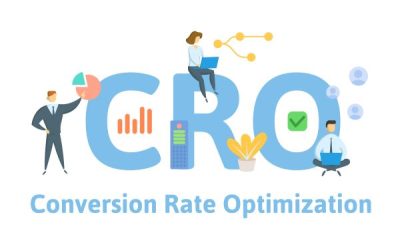
Conversion Rate Optimization (CRO) — the systematic process of increasing the percentage of website visitors who take a desired action.
For websites heavily reliant on organic search, understanding the evolving interplay between SEO and CRO is crucial for turning those precious clicks into customers, leads, or engaged readers.
This post explores the common and emerging challenges at the intersection of SEO and CRO (including the impact of AI search), effective tactics to boost conversions on SEO-driven sites, essential tools to aid your CRO efforts, and how these considerations differ for B2B and B2C businesses.
CRO Challenges for SEO-Driven Websites
The CRO Conundrum — When SEO Traffic Doesn’t Convert (Or Doesn’t Arrive)
Driving organic traffic is only half the battle, and even that half is facing new hurdles in the age of AI. Many SEO-heavy websites face distinct challenges in converting search visitors.
The Rise of AI Overviews and Zero-Click Searches
Search engines are increasingly providing direct answers and summaries (like AI Overviews) within the search results. This can reduce click-through rates (CTRs) to individual websites, as users may find their answers without needing to click further.
This means fewer direct opportunities for on-site conversion, making each click that does happen even more valuable.
Misaligned Intent
Even when users do click through, keywords that rank well might attract users whose search intent doesn’t perfectly match the page’s offering. For example, a user searching for ‘best running shoes’ (informational/investigative intent) might land on a product page (transactional intent) and bounce if they’re not ready to buy.
Poor User Experience (UX) on Landing Pages
With potentially fewer clicks from search, the experience for those who do arrive must be flawless. SEO efforts can sometimes prioritize technical aspects over user experience. Pages might be cluttered, slow to load, difficult to navigate, or not mobile-friendly, leading to high bounce rates.
Weak Calls to Action (CTAs)
Visitors arrive, consume content, but then what? If CTAs are unclear, uncompelling, or poorly placed, users won’t know the next step to take, or won’t be motivated to take it.
Content Overload without Clear Pathways
Blogs and content-rich sites, while great for SEO, can overwhelm users if there isn’t a clear journey guiding them toward a conversion goal (e.g., newsletter signup, ebook download, contact form).
Ignoring the ‘Mobile-First’ Conversion Journey
While SEO often emphasizes mobile-friendliness for ranking, the conversion paths on mobile are frequently an afterthought. Complex forms, tiny buttons, and non-optimized checkout processes kill mobile conversions.
Lack of Trust and Credibility
Organic visitors, especially first-timers who may have bypassed multiple other summarized results, might be skeptical. Insufficient social proof, unclear security measures (for e-commerce), or a generally unprofessional site design can deter conversions.
Focusing on Rankings Over Revenue
Sometimes, the obsession with ranking for specific keywords overshadows the ultimate goal: generating leads or sales. Traffic that doesn’t contribute to business objectives is vanity traffic, especially if overall click volume is decreasing due to AI summaries.

Smart CRO Tactics for AI SEO
CRO Tactics for SEO-Driven Websites & Blogs in the AI Era
Optimizing for conversions on a site with significant organic traffic requires a nuanced approach, especially considering the evolving search landscape.
Deep Dive into Search Intent and Value Beyond the SERP
- Analyze Keywords per Page — Understand why users search those terms. What information are they seeking that an AI Overview might not fully satisfy?
- Align Content & CTAs to Deeper Intent — Tailor your page content to offer unique value, insights, or interactivity that goes beyond a simple summary. Your CTAs should then align with this deeper engagement. For informational keywords, if an AI summary gives the basics, your CTA might be ‘Explore Interactive Data’ or ‘Get a Personalized Assessment.’
Optimize Landing Page Experience for Maximum Impact
- Improve Page Speed — Every second counts. Slow pages are conversion killers, more so if the user has fewer alternatives they’re willing to click.
- Enhance Readability & Scannability — Use clear headings, subheadings, bullet points, short paragraphs, and ample white space. Make it easy for users to quickly find the unique value you offer.
- Mobile-First Design — Ensure your pages are not just responsive but truly optimized for mobile usability.
- Crystal-Clear Value Proposition — Immediately communicate what unique benefit the page offers that couldn’t be gleaned from the search results page alone.
Strengthen Calls to Action (CTAs)
- Make them Visible & Compelling — Use contrasting colors, action-oriented language, and strategic placements. Emphasize the unique benefit of clicking.
- Offer Multiple, Relevant CTAs — For a blog post, you might have a primary CTA (e.g., ‘Subscribe for Exclusive Insights’) and secondary CTAs (e.g., ‘Download the Full Research Report’).
- A/B Test Your CTAs — Experiment with different wording, colors, and placements to maximize the conversion of the traffic you do get.
Create Clear Conversion Pathways and Build Direct Relationships
- Internal Linking Strategy — Guide users from informational content to more conversion-focused pages, showcasing the breadth and depth of your expertise.
- Lead Magnets for Blog Traffic — Offer highly valuable resources that are worth an email signup, helping you build a direct channel to your audience, independent of search engine shifts.
- Exit-Intent Pop-ups (Use Wisely) — Offer a compelling reason to stay or connect before a user leaves.
- Focus on Brand Building & Recall — If users are seeing your brand mentioned in AI Overviews (even without a click), strong brand recall can lead to direct visits later.
Build Unshakeable Trust and Credibility
- Showcase Social Proof — Testimonials, reviews, case studies, client logos, and trust badges become even more important to quickly establish authority.
- Clear Contact Information & About Us Page — Make it easy for users to verify who you are and get in touch when needed.
- Professional Design & E-E-A-T — Ensure your website looks modern, trustworthy, and clearly demonstrates Expertise, Authoritativeness, and Trustworthiness (and Experience). This can also influence how AI models perceive and use your content.
Leverage Analytics for CRO Insights in a Changing Landscape
- Track Key Metrics — Monitor bounce rate, time on page, conversion rates, and user flow. Pay close attention to how CTRs from organic search are evolving and resist the temptations of using SEO vanity metrics.
- Heatmaps & Session Recordings — Understand how the users who do arrive are interacting with your pages.
- User Surveys & Feedback — Ask visitors about their experience and what unique value they found (or hoped to find).

Essential CRO Tools for SEO Success
Tools for Boosting Conversion Rates
To effectively implement the tactics above and continuously improve your conversion rates, leveraging the right tools is indispensable. These tools provide data-driven insights, facilitate testing, and help you understand user behavior on a deeper level.
Here are some key categories and examples.
Website Analytics Platforms
These are foundational for understanding traffic patterns and conversion tracking.
- Google Analytics — The industry standard for tracking website traffic, user behavior, goal completions, and e-commerce transactions. It’s crucial for identifying which organic keywords and pages are driving conversions (or failing to), and how click patterns are changing. Tip: Connect your Google Analytics and Google Search Console accounts for deeper SEO insights within GA reporting.
- Plausible Analytics or Fathom Analytics — Privacy-focused alternatives that offer simpler dashboards and essential metrics.
A/B Testing and Personalization Tools
These allow you to experiment with different versions of your pages and tailor experiences to maximize every click.
- Optimizely — A powerful enterprise-level platform for A/B testing, multivariate testing, and personalization.
- VWO (Visual Website Optimizer) — Another popular choice offering a suite of tools for A/B testing, heatmaps, session recordings, and surveys.
- Convert Experiences — A robust A/B testing tool known for its speed and reliability.
User Behavior and Feedback Tools
These tools help you see how users interact with your site and gather direct feedback.
- Hotjar — Provides heatmaps (click, move, scroll), session recordings, on-page surveys, and feedback polls to visualize user behavior.
- Microsoft Clarity — A free tool offering heatmaps, session recordings, and insightful dashboards to understand user engagement and identify pain points.
- Crazy Egg — Similar to Hotjar, offering heatmaps, scrollmaps, and other visual reports to understand user interaction.
- SurveyMonkey or Typeform — Excellent for creating and distributing surveys to gather qualitative feedback.
- UserTesting or Maze — Platforms for conducting usability tests with real users.
Landing Page Builders (with CRO focus):
- Unbounce — Focuses on creating high-converting landing pages with built-in A/B testing.
- Leadpages — Another popular option for quickly building and testing landing pages.
Choosing the right stack of CRO tools depends on your budget, team size, technical expertise, and specific goals. However, starting with a solid analytics platform and then layering in tools for A/B testing and user behavior analysis provides a strong foundation.
SEO CRO in B2B and B2C
B2B vs B2C — CRO Nuances for Organic Traffic in the AI Search Era
While many core CRO principles apply universally, the strategies and challenges can differ significantly between B2B and B2C websites, especially with the evolving nature of organic search.
B2B Websites (e.g., SaaS, Enterprise Solutions, Industrial, Agencies)
Challenges:
- Longer Sales Cycles, Multiple Decision-Makers — AI Overviews might provide initial research, so leads clicking through could be further along the funnel or seeking deeper expertise.
- Niche Audience, Specific Intent — Organic traffic is often more targeted.
- Emphasis on Expertise & Trust — Your website needs to definitively prove your authority beyond what an AI can synthesize.
- Complex Offerings — Require detailed explanation and demonstration of unique value.
CRO Tactics Focus:
- Clear Value Proposition for Businesses — Articulate unique benefits not easily summarized by AI.
- Lead Generation Forms — Optimize for ease and perceived value.
- High-Value Content Offers (Gated & Ungated) — Whitepapers, case studies, webinars, etc., that showcase deep expertise. Consider if some content should be easily crawlable for AI, while premium content is gated.
- Prominent Contact Information & Demo Requests — For those convinced by your deeper content.
- Testimonials & In-Depth Case Studies — Crucial for building trust.
- Building Thought Leadership through Blog Content — Position your site as the definitive source.
- Clear ‘Next Steps’ for Different Stages of Awareness — Guide users who have done initial research via AI.
B2C Websites (e.g., E-commerce, Consumer Services)
Challenges:
- Shorter Sales Cycles, Higher Impulse — Conversions often need to happen quickly. AI Overviews might answer quick product questions, meaning clicks are from more qualified or complex queries.
- Broader Audience, Diverse Intents — Organic traffic can come from a vast range of search queries.
- Price Sensitivity & Comparison Shopping — AI Overviews might facilitate even faster comparisons.
- High Volume of Traffic (Potentially Reduced) — Requires robust A/B testing to maximize the value of each visit.
CRO Tactics Focus:
- Streamlined Checkout — More critical than ever.
- High-Quality Product Images/Videos & Unique Details — Offer what AI summaries can’t.
- Clear Product Descriptions & Specs — Answer all potential questions thoroughly.
- Urgency & Scarcity — Use ethically to encourage action from engaged visitors.
- Reviews & User-Generated Content — Builds trust quickly.
- Personalization — Make the experience highly relevant.
- Exceptional Mobile Experience — This is non-negotiable today.
By understanding these specific challenges, including the rise of AI-assisted search, and tailoring CRO tactics accordingly, both B2B and B2C websites can significantly improve their ability to convert valuable organic search traffic into meaningful business outcomes.
Want to stay updated on my SEO-related content? Add your email details below for periodic updates straight from me (David).
Your email info is safe here. We don’t sell, rent, or share your details with outside parties. You can easily unsubscribe at any time.
Like this post? Quickly share it with your social networks here.
SEO and Conversion Rate Optimization — Closing Thoughts
From Clicks to Conversions in the Evolving Search Landscape
The relationship between SEO and CRO has always been symbiotic, but the evolving digital landscape, particularly the rise of AI-driven search features, elevates the importance of CRO from a best practice to a fundamental necessity.
Attracting organic traffic remains vital, yet ensuring that traffic converts requires a deliberate, user-centric approach.
As AI Overviews and zero-click searches potentially reduce the sheer volume of clicks, the value of each visitor who does land on your site increases exponentially. This demands an unwavering focus on optimizing their experience: understanding their deeper intent, providing unique value beyond what AI can summarize, removing friction, building trust, and presenting clear, compelling calls to action.
Success in this new era isn’t just about ranking; it’s about resonance. It requires leveraging the right tools to gain insights, continuously testing hypotheses, and adapting strategies based on real user behavior.
By integrating SEO insights with robust CRO practices, businesses can navigate the changing tides of search and effectively turn hard-earned visibility into tangible, measurable results. The ultimate goal remains the same: transforming visitors into loyal customers and advocates for your brand.
Questions or Comments?
I hope this discussion of CRO issues and challenges in the context of modern SEO has been helpful! I’ll wrap up with a few related questions for you:
- For your business site or other important websites, how much effort goes into conversion rate optimization? What parts of this are more applicable to SEO-driven site traffic?
- What parts of organic search CRO have gotten harder or easier in the last year or so? How are you addressing any new challenges?
- What tools are helping you the most with CRO improvements? Are any not living up to their initial promises?
Feel free to add more in the comments below with any thoughts, feedback, or related questions. Thanks also for any social shares on this post via the buttons below!
