
Last updated Nov 14, 2025
Here Come the Autonomous AI Sales Agents
B2B inside sales and the SDR role are changing rapidly thanks to powerful AI capabilities.
With help from AI, many sales prospecting functions can be intelligently automated — and even set on ‘autopilot’ mode.
This post introduces B2B AI and autonomous sales prospecting, with insights and tools to help B2B companies thrive in this new environment.
Let’s take a closer look below!
This post may contain a few referral links to select vendor partners. We may receive compensation for purchases made via these links, at no additional cost to buyers.
Introduction — B2B AI & Sales Prospecting
The B2B SDR’s Dilemma
If you ask any B2B Sales Development Rep (SDR) what they actually do all day, you might be surprised by the answer. Their job is to find and book qualified meetings, demos, or product trials, but the reality is that much of their time is spent on anything but actual selling.
A majority of an SDR’s week can be lost to non-revenue-generating tasks: manually building lead lists, researching prospects across a dozen tabs, agonizing over a single ‘personalized’ email, and endless, mind-numbing data entry into CRMs or prospecting tools.
This is the core problem with traditional B2B prospecting: it’s a high-effort, low-yield game. The process is painfully slow, the cost per meeting is astronomical, and it’s a primary driver of burnout for some of the most resilient people on your team.
We’ve tried to fix this with more tools, but we’ve just given our sales reps more to manage.
The AI-Driven Shift
Now, a fundamental shift is underway. This isn’t just another ‘AI tool’ to help a human do their work faster. It’s the emergence of the AI agent — an intelligent system capable of executing the entire prospecting workflow on its own. ‘Automated outbound’ and ‘revenue orchestration’ are key related concepts here as well.
This post will cover what B2B AI autonomous sales prospecting truly is, exploring the new tactics it enables and the key tools that are leading this change.
Most importantly, we’ll see how this new category of AI doesn’t just complement, but fundamentally redefines the roles of your existing martech stack, including your CRM, Customer Data Platforms, and ABM tools.
What is B2B AI Autonomous Sales Prospecting?
Powering a More Intelligent B2B Sales Workflow
Before we go further, we must define the most critical distinction: the difference between an AI Assistant and an AI Agent in this sales context.
- An AI Assistant (or ‘co-pilot’) suggests what to do. It’s a tool that helps a human work faster. It might draft an email, summarize a call, or find a piece of data. The human sales rep is still the ‘pilot’ — they make every decision and take every action.
- An AI Agent (Autonomous) executes the task. It acts as the pilot. You delegate an outcome, like ‘Find and book meetings with VPs of Marketing at Series B fintech companies,’ and the AI agent performs the entire multi-step process on its own.
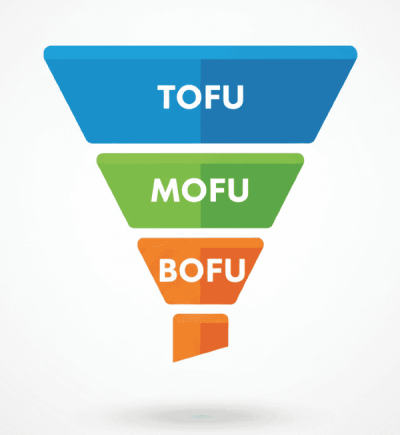
With that in mind, B2B AI autonomous prospecting is the use of these AI agents to execute the entire top-of-funnel sales process with minimal human intervention.
AI and the Prospecting Workflow
AI-powered agents act as digital team members, handling the full prospecting lifecycle:
- Prospect Identification: They go beyond static (and often stale) lists. AI agents scan millions of data sources to find new, high-fit prospects that match your Ideal Customer Profile (ICP).
- Data Enrichment & Research: Once a prospect is identified, the agent deep-dives. It finds their verified contact info, scours LinkedIn for their recent activity, reads company news to find ‘triggers’ (like new funding or a product launch), and synthesizes this research. AI sales agents look for ‘buyer intent’ signals and can even peek into the so-called ‘B2B dark funnel’ for useful nuggets of insight.
- Personalized Outreach: The agent uses this research to craft a 1-to-1, human-like, multi-channel (email, LinkedIn) message that is genuinely relevant.
- Conversational Engagement: This is the game-changer. When a prospect replies, the agent (using Generative AI) understands the intent, answers questions, handles initial objections (‘We’re not interested right now’), and nurtures that interest.
- Meeting Booking: Once the prospect shows intent, the agent intelligently handles the back-and-forth of scheduling, finds a time on the human sales rep’s calendar, and books the meeting.
This represents the biggest shift in sales since the CRM. We are moving from a ‘System of Record‘ (a passive database where humans log what they did) to a ‘System of Action‘ (an active system that does the work and logs its own results).
AI Assistant vs AI Agent — Generic Definitions & Distinctions
| Term | Simple, Generic Definition |
| AI Assistant | A reactive software program designed to help a user by understanding natural language commands and completing specific tasks or providing information upon request. |
| AI Agent | An autonomous software system designed to act on a user’s behalf to achieve a complex, high-level goal, often by planning and executing multiple steps without constant human input. |
The main difference is that an AI Assistant is typically reactive, waiting for a command to execute a task, while an AI Agent is proactive and can independently plan and take actions to meet an objective.
Top 5 New B2B Sales Tactics Powered by Autonomous AI
Working Smarter, Not Just Harder
When you move from a human-driven process to an agent-driven one, you don’t just get speed — you unlock entirely new sales tactics. Here are five top-tier strategies that are now possible with AI-powered sales automation.
Hyper-Personalization at Scale
This has been the ‘holy grail’ of sales for a decade, but it’s been much more hype than reality. A human cannot truly research 100 prospects and write 100 unique, relevant emails in a day. An AI agent can.
We’re not talking about simplistic [First_Name] and [Company_Name] email mail merges here. We’re talking about an agent that reads a prospect’s latest LinkedIn post, mentions a key takeaway, and connects it to a relevant value proposition for your company’s solutions.
Or one that sees their company just announced a new funding round and writes, ‘Congrats on the new Series C — usually this means scaling your data infrastructure is a top priority…’
Dynamic ICP ‘Lookalike’ Prospecting
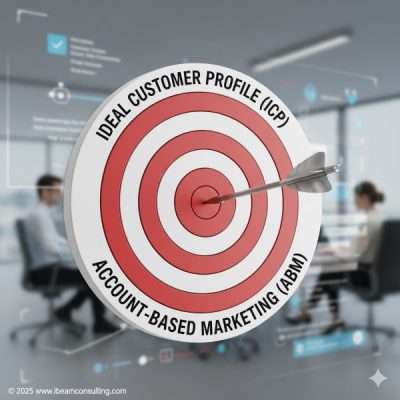
Your Ideal Customer Profile shouldn’t be a static document. An autonomous agent can connect directly to your CRM, analyze your top 100 closed-won deals, and identify the real attributes of your best customers (e.g., ‘They all use a specific tech stack, are between 500-1000 employees, and have hired a new Head of Data in the last 6 months’).
The agent then uses this dynamic, evolving ICP to autonomously search the web for new companies and contacts that ‘look like’ your best customers, adding them to the pipeline.
Real-Time Intent Data Activation
This is where the martech stack comes to life. Your ABM platform (like 6sense or Demandbase) is great at telling you which accounts are ‘in-market.’ But what happens next?
Today, that signal usually goes into a queue for an SDR to (eventually) act on. With an autonomous agent, the instant that signal hits, a workflow is triggered. The agent identifies the entire buying committee at that account, begins its research, and launches a personalized, multi-channel outreach campaign before that prospect’s research is even finished.
24/7 Conversational Qualification
What happens when a prospect replies at 10 PM on a Friday? Or what about the ‘not right now, check back in 6 months’ email? AI agents are always on. They use conversational AI to have intelligent, multi-turn conversations to qualify (or disqualify) leads.
Your AI sales agents can handle initial objections, answer common questions (‘How are you different from X?’), and even probe for BANT (Budget, Authority, Need, Timeline) before a human rep ever needs to get involved.
Autonomous Multi-Channel Orchestration
Human-run ‘sequences’ can be rigid, linear, and even error-prone or inconsistent. An AI agent operates with dynamic, real-time logic. It can send a personalized email, wait three days, see the prospect opened it but didn’t reply, send a LinkedIn connection request with a relevant note, and then follow up on the original email thread.
The AI agent orchestrates this complex, multi-touch journey across different channels, adapting its behavior based on the prospect’s actions (or inaction).
The Tools — Building Your B2B AI Salesforce
Deploying AI-Powered Sales Agents — Main Options
The autonomous prospecting market is exploding, with new players emerging and existing giants adding agent-like features to enable automated outbound sales. It’s helpful to break the tools into four main categories.
Category 1: The ‘AI SDRs’ (Full-Stack Autonomous Sales Agents)
These are the most direct examples of autonomous prospecting. They are purpose-built to act as a ‘digital SDR’ that you can hire.
You give them an ICP and a goal (e.g., ‘book 5 meetings a week’), and they handle the entire workflow from research to booking. Examples include:
Category 2: The Data & Workflow Platforms (The ‘Build-Your-Own’ Agent)
These platforms provide the powerful ‘building blocks’ — data enrichment, web scraping, and AI logic — for you to construct your own autonomous prospecting flows.
They are incredibly powerful for teams that want to create highly custom, proprietary sales machines by ‘waterfalling’ data from different sources. Examples include:
Category 3: The AI-Powered Sales Engagement Platforms (The ‘Co-pilots’ Adding Autonomy)
These are the tools your sales team likely already uses, like Salesloft and Apollo. They started as ‘AI Assistants or ‘Co-pilots’ to help human reps work faster (e.g., email writing, call summaries).
Now, they are rapidly adding more autonomous features, blurring the lines and becoming ‘System of Action’ platforms themselves. Examples include:
Category 4: The Big Platform AI (Integrated Agents)
This category represents the future for most businesses: AI agents built directly into the CRM you already live in. These agents have the advantage of being native to your ‘System of Record,’ allowing them to seamlessly read all your customer data and write their actions back to the correct records. Examples include:
How AI Prospecting Differs from Your Existing B2B Martech Stack
Autonomous AI Complements & Empowers Other B2B Tools
This new AI-based ‘System of Action’ doesn’t replace your existing B2B martech stack — it makes it dramatically more valuable by acting as the execution layer that sits on top. Here’s how to understand the new order of operations.
AI Prospecting vs CRM (e.g., Salesforce, HubSpot)
- CRM: A passive database. It’s a ‘System of Record’ that stores what humans tell it. It’s like a traditional library where you log books.
- AI Prospector: An active agent. It’s a ‘System of Action’ that writes new data to the CRM (e.g., ‘New prospect found,’ ‘Meeting booked, etc.). It’s the researcher who goes out, finds new books, and automatically logs them in the library’s card catalog.
AI Prospecting vs Marketing Automation (e.g., Marketo, Pardot)
- MA: Built for 1-to-many inbound nurturing. It warms up leads you already have (e.g., from an ebook download) with pre-set drip campaigns.
- AI Prospector: Built for 1-to-1 outbound engagement. It finds new leads that don’t know you exist and engages them in a personalized, conversational way. It’s the difference between a generic ‘1:many’ newsletter and a personal conversation.
AI Prospecting vs Customer Data Platform (CDP)
- CDP: The ‘central library.’ It unifies all your first-party customer data (from your website, app, CRM, etc.) to create a single ‘golden record’ of a customer.
- AI Prospector: The ‘scout.’ It uses the CDP’s data to understand your golden-record ICP, then goes out to find new prospects (third-party data) that match that profile. It’s the engine that bridges your internal data with the external world.
AI Prospecting vs ABM Platform (e.g., 6sense, Demandbase)
- ABM Platform: The ‘spotter.’ It’s an incredible sales intelligence tool that tells you which accounts are in-market and showing buying intent. It answers the ‘Who should we target?’ question.
- AI Prospector: The ‘boots on the ground.’ It takes the ABM platform’s ‘who’ (target account) and immediately executes the outreach to the specific, high-value people at that account. It answers the ‘Now what?’ question.
Related: Learn more in these posts about AI and B2B Account-Based Marketing, AI and B2B lead generation, and AI and B2B data providers.
The Future — Managing a Digital Sales Team
From Manual Prospecting to Smart Automation via AI
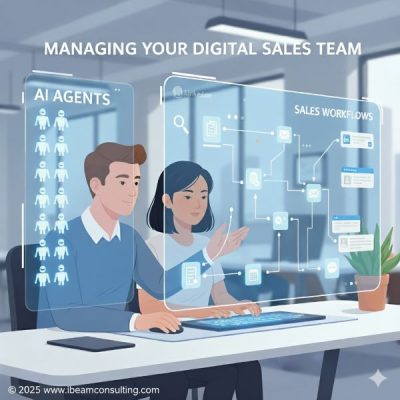
This shift doesn’t make sales reps obsolete — it makes them managers. The SDR’s role will evolve from a traditional ‘manual prospector’ to an ‘AI Agent Manager’ or ‘Fleet Commander.’
Their new job will be strategic, focused on:
- Training & Tuning: Fine-tuning the ICPs and ‘lookalike’ models the AI uses.
- Conversation Auditing: Reviewing AI-led conversations to ensure brand voice, tone, and accuracy.
- Compliance & Governance: This is non-negotiable. The manager must ensure the agent’s actions adhere to strict data privacy laws like GDPR in the EU and CCPA in California. This involves configuring the AI to respect data minimization (only processing necessary data), automatically honor opt-out requests, and maintain a clear, auditable record of its processing activities for legal purposes.
- Strategy & Oversight: Managing the AI’s performance, setting its goals (e.g., ‘We need more pipeline in the enterprise sector this month’), and analyzing its results to make it smarter.
This requires a shift in SDR skills, moving from brute-force activity and endurance to more analytical and technical capabilities. The best ‘AI Agent Managers’ will excel at systems thinking, data analysis, and prompt engineering, not just cold calling.
The ‘human-in-the-loop’ becomes more critical than ever, not for doing the manual work, but for directing it. This ensures ethical outreach (avoiding ‘hyper-spam’) and allows humans to take over high-value, complex conversations when a prospect is truly ‘sales-ready.’
The future isn’t far off — agents that not only book the meeting but also conduct the initial discovery call, provide a human-ready summary, and update the deal stage are already on the horizon.
Want to stay updated on my B2B marketing-related content? Add your email details below for periodic updates straight from me (David).
Your email info is safe here. We don’t sell, rent, or share your details with outside parties. You can easily unsubscribe at any time.
Like this post? Quickly share it with your social networks here.
B2B AI & Autonomous Sales Prospecting — Closing Thoughts
Conclusion: Start Automating & Managing a Smarter Sales Process
Recent AI sales technology was defined by ‘AI assistants’ that gave us better suggestions and LLM outputs. The next decade will be defined by ‘AI sales agents’ that execute on our strategies for us.
This is the most significant shift in B2B sales since the invention of the CRM, moving us from passive systems that record data to active systems that autonomously create pipeline.
The key takeaway is this: autonomous AI doesn’t just add to your martech stack, it activates it. It turns your passive, siloed databases — your CRM, CDP, and ABM intent lists — into a unified, dynamic, and relentless revenue engine.
This technology is moving faster than any other platform shift in history. The time to start is now.
Your Next Steps:
- Audit Your Prospecting Process: Sit with your sales team and map your entire prospecting workflow. Find the single biggest manual bottleneck — is it research? Is it list building? Is it data entry?
- Start with One Problem: Don’t try to hire a ‘full-time AI SDR’ overnight. Pick one of the tool categories and solve that one bottleneck first.
- Ask Your Team This Question: ‘What if you could start your day with two new, qualified meetings already on your calendar? What would you do with that time?’
The answer to that question is the future of B2B sales.
Questions or Comments?
That’s it for this post. I hope it is helpful and provides some new ideas for you.
Let’s wrap up with a few related questions for your consideration:
- To what extent is your early-stage B2B sales prospecting process automated today?
- How is your existing martech stack or toolkit evolving to incorporate AI? How much AI agentic capability does it have today?
- What level of autonomous AI sales prospecting would you feel comfortable deploying today? How about in the next 2-3 years?
Feel free to add more in the comments below with any thoughts, feedback, or related questions. Thanks also for any social shares on this post!
