
Last updated Feb 26, 2025
The Importance of ‘Value Added’ Content for SEO Growth
When writing a new piece of website/blog content, or updating older work, you’re probably thinking about how to add new and unique insights or angles to your content.
That’s a good thing since it’s directly related to the concept of ‘information gain’ and how it may impact your content’s SEO performance.
This post focuses on SEO and information gain, with insight, tips, and tools to help you add more uniqueness to your SEO-focused content.
Let’s take a closer look below…

This post contains a few referral links to select vendor partners. We may receive compensation for purchases made via these links, at no additional cost to buyers.
What Is ‘Information Gain’ in SEO?
Going Above and Beyond Existing Content on the Web
The concept of ‘information gain’ in SEO refers to the unique and valuable content a web page, blog post, or article provides beyond what is already available in other search results for a given topic.
It’s a measure of how much new information a piece of content offers compared to the consensus content that is already available on the web.
Understanding Information Gain
Information gain is essentially the ‘extra’ or unique content that sets a webpage apart from others covering the same topic. It’s what remains when you remove all the common information found across multiple sources.
This concept is closely tied to Google’s proprietary information gain score, which measures the additional information a document provides beyond what a user has already seen in previous search results.
Importantly, there’s also a level of user personalization in Google’s measure of information gain, as indicated in the patent details below.
Google’s Information Gain Patent
The most significant applicable patent in this area is Google’s ‘Contextual Estimation of Link Information Gain’ (Patent ID: US20200349181A1), first filed in October 2018 and published in November 2020.
This Google patent focuses on providing additional value beyond what a user has already seen. Key aspects of this patent include:
- Calculating an information gain score for documents
- Ranking documents based on these scores
- Presenting search results to users based on potential new information
Patent Abstract:
See below for the actual abstract from Google’s public US patent filing (source = https://ppubs.uspto.gov/pubwebapp/).
“Techniques are described herein for determining an information gain score for one or more documents of interest to the user and present information from the documents based on the information gain score. An information gain score for a given document is indicative of additional information that is included in the document beyond information contained in documents that were previously viewed by the user. In some implementations, the information gain score may be determined for one or more documents by applying data from the documents across a machine learning model to generate an information gain score. Based on the information gain scores of a set of documents, the documents can be provided to the user in a manner that reflects the likely information gain that can be attained by the user if the user were to view the documents.”
Importance of Information Gain in SEO
Information gain has become increasingly relevant and important in SEO for several reasons:
- Improved Search Rankings — Content with high information gain is more likely to rank better in organic search engine results pages (SERPs).
- User Engagement — Unique content tends to engage users more effectively, potentially leading to better on-site visitor metrics and conversions.
- Credibility and Authority — Consistently providing unique and valuable information helps establish a website as a trusted source within its industry.
- Link Building — Content with high information gain has a greater potential to attract organic backlinks.
- AI-Generated Content Differentiation — While AI writers based on large language models (LLMs) can easily replicate consensus content, information gain often requires human expertise and original insights, helping to differentiate content in an era of AI-generated material.
Adding Information Gain to SEO Content
Strategies for Enhancing Information Gain
To improve information gain in your content, incorporate a combination of the approaches below, as appropriate for each piece and target audience.
First-hand Experiences and Expert Insights
Content that shares personal experiences, anecdotes, or expert opinions offers unique value:
- First-person accounts of using products or services
- Expert interviews or quotes
- In-depth analysis and perspectives based on unique expertise
- Behind-the-scenes insights from industry professionals
This type of content provides perspectives and information that can’t be easily replicated by competitors or AI.
Original Research and Data
One of the most powerful ways to achieve information gain is through original research and proprietary data. This includes:
- Conducting independent studies or surveys
- Sharing exclusive expert insights from internal company data
- Presenting case studies with unique findings
- Offering statistical analysis not found elsewhere
This type of content immediately boosts uniqueness and provides value that can’t be found on other sites.
Long-form, Comprehensive Content
Long-form content that covers a topic in-depth tends to perform well for information gain. This includes:
- Detailed guides and tutorials
- In-depth articles and blog posts (1000+ words)
- Comprehensive listicles
These formats allow for thorough exploration of a topic, addressing user questions and going beyond surface-level information. This includes less-discussed aspects of a topic that others might overlook.
Multimedia Content
Incorporating various media formats can significantly enhance information gain:
- Videos
- Infographics
- Interactive tools
- Audio versions of content
- Diagrams and charts
These elements not only make content more engaging but also cater to different learning styles and can simplify complex topics.
Updated and Refined Information
Regularly updating existing content with new information, data, or insights can maintain and increase information gain over time. This includes:
- Adding recent developments to evergreen topics
- Refreshing older pieces with current statistics
- Expanding content to address newly emerging user questions
By implementing these content types and strategies, websites can create material that stands out in search results and provides genuine value to users, aligning with search engines’ goals of delivering the most helpful and informative results.
Pro Tip: I have found that updating older (but still important) content can provide significant near-term boosts in SEO and organic traffic. This tactic is a quick SEO win opportunity for many websites and blogs. Learn more about SEO and updating important older content.

Limitations of AI-Generated Content
AI-generated content can achieve some degree of information gain, but it faces significant limitations compared to human-created content. Here’s a breakdown of the key points:
- Consensus Information — AI models are trained on existing data, which means they primarily produce ‘consensus content’ or information that is already widely available. This inherently limits their ability to generate truly novel insights or information.
- Lack of Originality — AI content generators cannot create original research, conduct interviews, or provide new perspectives based on first-hand experiences. These are crucial elements of information gain that AI currently cannot replicate.
- Copycat Content — The proliferation of AI-generated content has led to an increase in copycat and repetitive content across the web, which does not provide additional value to users or search engines.
Potential for AI-Assisted Information Gain
Despite these limitations, AI-generated content can contribute to information gain in certain ways:
- Starting Point — AI can provide a foundation or outline for content that humans can then expand upon with their own expertise and insights. This is one of the main features of many AI SEO content development platforms (see the tools section below). For example, building AI-assisted SEO content briefs.
- Data Synthesis — AI can quickly compile and synthesize large amounts of existing information, potentially presenting it in new ways that add value for readers.
- Content Enhancement — When used responsibly, AI can help enhance human-created content by suggesting additional relevant information or improving structure. Features such as ‘content scoring’ or ‘content grading’ within AI-assisted content platforms (see examples below) can be very helpful for SEO content optimization efforts.
Related: Learn more about the pros and cons of AI-written content, plus more on long-form content advantages for SEO.
Best Practices for Achieving Information Gain with AI
To maximize the potential for information gain when using AI:
- Human Editing — Always have human experts review and edit AI-generated content to add unique insights, personal experiences, and original research.
- Combine with Original Research — Use AI as a tool to complement, not replace, original human research and analysis.
- Focus on Thought Leadership — Leverage AI for basic information, but rely on human expertise for opinion, experience, and in-depth analysis.
- Diversify Content Strategy — Don’t rely solely on AI-generated content. Incorporate various content types, including case studies, interviews, and expert opinions.
While AI-generated content alone struggles to achieve significant information gain, it can be a valuable tool when combined with human expertise and original insights.
The key is to use AI responsibly as part of a broader content strategy that prioritizes unique, valuable information for users.
Pro Tip: Be careful and realistic about relying on ‘100% AI’ websites and content portfolios, especially if SEO is the primary traffic strategy for the site. If the promise of ‘AI everything’ sounds too push-button easy and therefore ‘too good to be true’, then it probably is. A competitive site that delivers true information gain and unique value to its audience should — in theory at least — win the SEO battle against an all-AI site.
Information Gain, AI, and Subcontracted Writers
If you’re outsourcing some or all of your website content development, especially long-form articles and blog posts, be sure to understand and enforce how your outside writers utilize AI writing assistants in their work.
While these AI tool-assisted writers have the potential to produce lots of content for you at compelling price points, it’s also possible or even likely that you’ll get cookie-cutter, non-original work back that lacks any compelling ‘uniqueness factor’.
In other words, content with no real information gain.
With the right content development process and tools in place, you can still leverage AI writing support and outside resources (sub-contractors, agencies, and freelancers), and deliver high-quality content that offers unique value to your website/blog visitors.
Want to stay updated on my SEO-related content? Add your email details below for periodic updates straight from me (David).
Your email info is safe here. We don’t sell, rent, or share your details with outside parties. You can easily unsubscribe at any time.
SEO Content Tools and Information Gain
Leveraging Smart SEO Tools to Help Drive Content Value
Several SEO content tools have been developed that — among other benefits — can also help deliver positive information gain in website or blog content.
These tools focus on helping content creators produce unique, valuable, and comprehensive content that goes beyond the standard information available on a topic.
Here are some of the most notable tools.
Frase — Research-Based & AI-Assisted SEO Content
Frase is a comprehensive SEO content optimization platform that includes features to help enhance information gain:
- Content brief generator that analyzes top-ranking content
- AI writing assistant to help create unique content
- Real-time scoring based on topic coverage
- Suggestions for optimizing content as you write

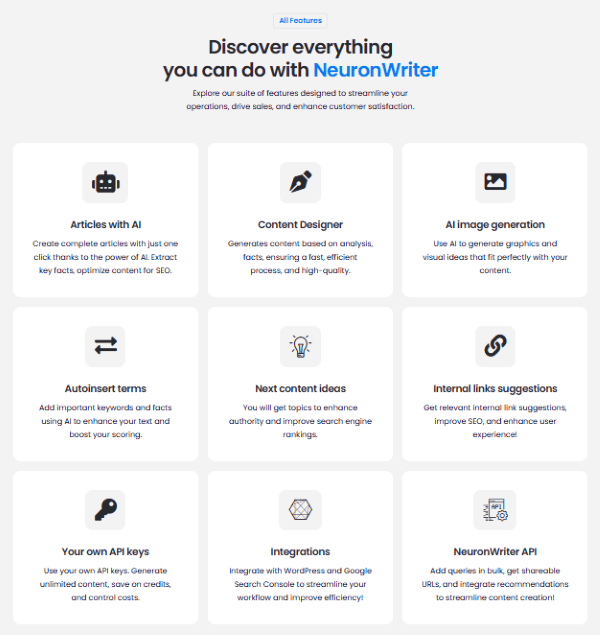
NeuronWriter — Smart Content with Semantic (NLP) SEO
NeuronWriter uses advanced techniques to help create content with high information gain:
- Semantic models and Natural Language Processing (NLP) analysis
- Competitive analysis and SERP analysis
- Real-time content scoring
- Recommendations for NLP terms to include
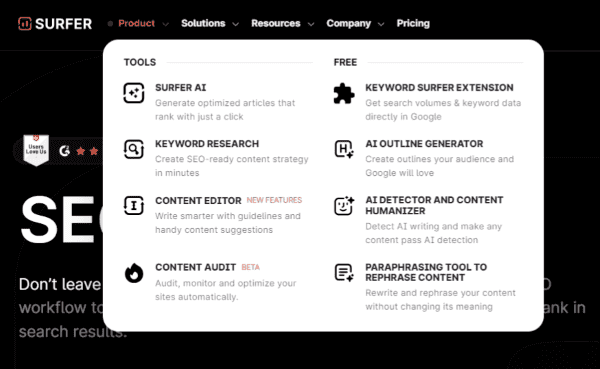
Surfer — AI-Driven SEO Content Optimization
Surfer offers features that can contribute to information gain:
- SERP analysis for content briefs
- Structural recommendations (word count, headers, paragraphs, images)
- Topic and question suggestions
- Keyword inclusion recommendations
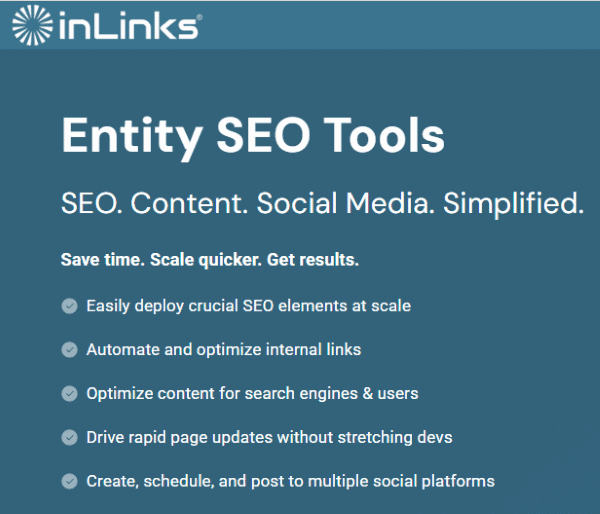
InLinks — AI-Powered, Entity-Based SEO
InLinks focuses on entity SEO and semantic analysis to help improve information gain:
- Proprietary semantic analyzer and knowledge graph
- Entity-based keyword and question discovery
- Content depth recommendations
- Competitor comparison for topic coverage
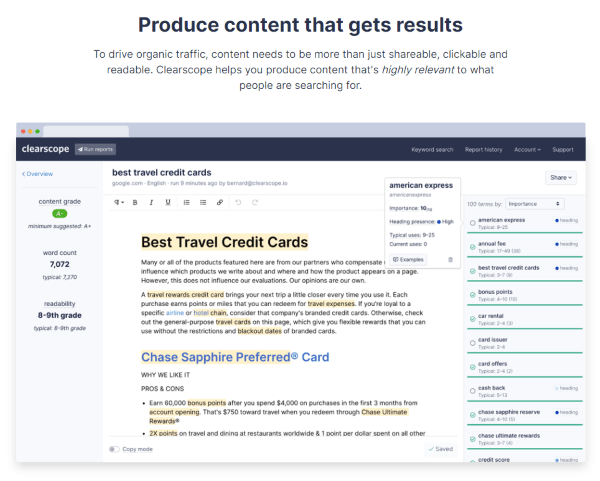
Clearscope — AI-Powered & Data-Driven Content Platform
Clearscope is specifically mentioned as a tool for producing highly relevant content:
- AI-powered platform using advanced NLP models
- Content grading based on relevance and comprehensiveness
- Term recommendations ordered by importance
- Research suggestions for themes, questions, and citations
These tools and others in this SEO sub-category can help content creators identify gaps in existing content, suggest unique angles or topics to cover, and provide guidance on creating comprehensive, high-quality content that offers genuine value to readers.
By leveraging tools like those highlighted above, you and your content creators can work towards achieving higher information gain scores and potentially improve search engine rankings.
Good to Know: The tools above often incorporate SERP competitor analysis to support content scoring and keyword/term/topic gap insights and recommendations. This capability by itself does not guarantee information gain but can help you identify and develop fresh ideas for including new and unique content.
Also Note: The ‘content scoring’ and ‘content grading’ features in these tools do not provide a true ‘information gain score’ that is identical to Google’s internal algorithms. However, they do produce helpful SEO scoring metrics and content suggestions based on competitive SERP analysis.
Like this post? Quickly share it with your social networks here.
SEO and Information Gain — Closing Thoughts
Delivering Unique Human Value in the Age of AI
Information gain in SEO refers to the unique and valuable content a web page provides beyond what is already available in other search results for a given topic.
It’s a concept closely tied to Google’s information gain score, which measures the additional information a document provides beyond what a user has already seen in previous search results.
This concept has become increasingly important in SEO as search engines aim to deliver the most helpful and informative results to users.
Content types that are most effective at achieving information gain include original research and data, long-form comprehensive content, multimedia content, first-hand experiences and expert insights, and regularly updated content.
These formats allow for thorough exploration of topics, address user questions, and go beyond surface-level information.
Several AI-assisted SEO tools have been developed to support delivering positive information gain, including Frase, NeuronWriter, Surfer, InLinks, Clearscope, and others in this software category.
These tools help content creators identify gaps in existing content, suggest unique angles or topics to cover, and provide guidance on creating comprehensive, high-quality content.
Google’s patent — ‘Contextual Estimation of Link Information Gain’ — outlines a method for calculating an information gain score for web pages.
While the Google information gain scoring algorithm remains proprietary, the patent filing provides insights into how Google might calculate these scores using machine learning models, document analysis, and comparative analysis.
AI-generated content can contribute to information gain in certain ways, but it faces significant limitations compared to human-created content. AI struggles to provide truly novel insights or information, conduct original research, or offer new perspectives based on first-hand experiences.
However, when used responsibly and combined with human expertise, AI can be a valuable tool in creating content with high information gain.
Questions or Comments?
I hope this brief discussion of information gain concepts and their significance in SEO-focused content development has been helpful! I’ll close with a few related questions for you:
- Do you (or your content team) apply concepts of information gain in your SEO work today?
- Do you combine AI writing and human writing/editing in your current SEO content work? If so, what challenges do you face regarding establishing true information gain?
- Which SEO content tools, if any, do you use most to assist with truly unique and value-added content development?
Feel free to add more in the comments below with any thoughts, feedback, or related questions. Thanks also for any social shares on this post.
