
The Rise of the Indian SEO Tools Stack
Many digital marketers are at least aware of major premium SEO platforms such as Ahrefs, Moz, and Semrush.
But there’s an entire ecosystem of amazing SEO toolkits founded and built in India — and they’re worth getting to know better.
This post highlights SEO tools from India, with background, insights, and example toolkits that can be great alternatives to consider for any modern SEO tools stack.
Let’s dive in below!
This post contains a few referral links to select vendor partners. We may receive compensation for purchases made through these links, at no additional cost to the buyer.
Last updated Jun 10, 2026
India’s SEO Tools & Ecosystem
Introduction: The Quiet SEO Revolution in the Subcontinent
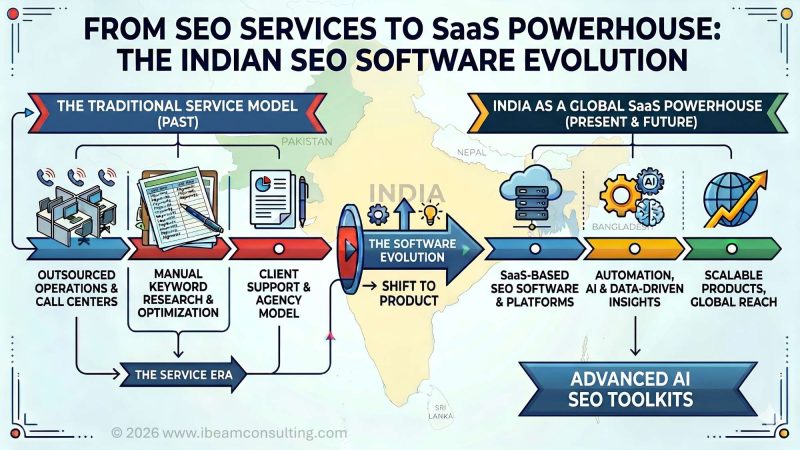
For over two decades, global digital marketing has viewed India through a singular, transactional lens: the ultimate backend engine. When mid-sized digital agencies in New York, London, or Sydney landed more clients than their local staff could support, they looked eastward for cost-effective help.
India was where you outsourced the manual labor of search engine optimization — the grueling, repetitive tasks of manual backlink outreach, high-volume keyword categorization, basic copy production, and routine technical SEO audits.
It was an ecosystem built on labor arbitrage, where success was measured by headcount and billed hourly.
But while the West looked at India as an outsourcing hub, a profound, structural evolution was quietly taking place beneath the surface.
Today, that old paradigm is breaking down. The Indian tech ecosystem has undergone a massive “Services to SaaS” transformation.
Over the last decade, the country’s brightest digital marketers, engineers, and bootstrapped agency founders grew tired of building client empires on the backs of fragile Excel spreadsheets and expensive Western software licenses.
They realized that the custom scripts, API connectors, and automated templates they had built to optimize their own internal agency workflows were actually highly valuable, highly scalable software products.
What started as localized internal workarounds has evolved into a powerhouse of product-led growth (PLG). Today, Indian-born SaaS startups are not just offering cheap alternatives to legacy search platforms; they are actively pioneering the next frontier of organic search.
Armed with deep engineering talent, lower development overheads, and a native agility that legacy players struggle to replicate, India’s SEO product ecosystem is building tools engineered for a changing web.
From NLP-driven content optimization engines to next-generation semantic intelligence suites, this is the story of how India transitioned from executing search strategies to building the global SEO platforms that power them.
Regional Dynamics: The Service Engines of Pakistan and Bangladesh
While India has carved out a clear path as the product-led SEO SaaS leader of South Asia, neighboring ecosystems in Pakistan and Bangladesh represent critical, complementary forces in the global search market.
Rather than competing directly on software product development, these regions have established dominant positions in service execution:
Pakistan’s Agency Powerhouse
Pakistan has evolved into a premier global hub for elite technical SEO talent and managed international agency services. Specialized Pakistani firms and freelance developers frequently build custom scripts, API data pipelines, and internal templates to solve micro-level crawl challenges.
However, the market has traditionally bypassed building venture-backed multi-feature SaaS suites, choosing instead to utilize Indian and Western platforms to power high-margin client strategies.
Bangladesh’s Execution & “Group Buy” Epicenter
Bangladesh possesses a massive density of search practitioners specializing in high-volume link building, content syndication, and digital PR. Because high-end Western subscription fees can be a major hurdle for bootstrapped local operators, Bangladesh has pioneered a highly efficient “Group Buy” market.
These platforms legally or gray-market pool software licenses (i.e., “group buy” SEO tools), making analysis tools incredibly accessible for execution teams who then rely heavily on the aggressive regional rates of neighboring Indian SaaS providers.
In short: while India engineers and markets the analytical SEO tools, Pakistan and Bangladesh represent the power users executing the SEO strategies behind them.
The Emergence of SEO Tools Built in India
The Origin Story: From Spreadsheet Agencies to Global SaaS Product Companies
The trajectory of India’s SEO product landscape is not a story of sudden venture-capital intervention. Instead, it is a highly pragmatic, three-phase evolution driven by the sheer necessity of surviving in the hyper-competitive digital marketing margins.
Phase 1: The Agency Lab (Mid 2000s – Early 2010s)
The roots of Indian SaaS can be found in the noisy, high-pressure digital agencies of Delhi NCR, Mumbai, and Bengaluru in the mid-2000s.
Operating on razor-thin retainer margins from international clients, these agencies had a fundamental problem: keeping up with client reporting and keyword tracking at scale was humanly impossible without hiring hundreds of operational staff.
To cope, agency founders hired young, ambitious software developers to sit alongside their SEO delivery teams. Instead of building web pages, these developers were tasked with building internal automation tools.
They wrote Python scripts to scrape Google Search Results Pages (SERPs), built custom dashboard macros to compile API data from Google Analytics and AdWords, and designed rudimentary, white-labeled reporting portals so account managers wouldn’t have to manually build PDF reports every Friday afternoon.
During this era, these tools were tightly guarded secrets — viewed purely as internal intellectual property designed to give local agencies an operational advantage over Western competitors who were still manually compiling spreadsheets.
Phase 2: Productization & Bootstrapping (2013 – 2020)
By the early 2010s, a collective realization swept through the Indian agency landscape: If we are struggling with these workflow bottlenecks, then every boutique digital agency on Earth is struggling with them too.
This realization marked the dawn of commercialization. Agency owners began spinning out their internal tools as standalone software products.
A classic pioneer of this transition is RankWatch, founded in Gurugram in 2012.
Originally conceived to solve the internal challenge of tracking thousands of localized keyword rankings for international agency clients without paying exorbitant fees to Western platforms, RankWatch was commercialized and taken to a global audience.
By offering highly granular local rank tracking and white-labeled agency reports, RankWatch served as a vital early proof of concept, demonstrating that Indian technology corridors could engineer and scale stable, globally compliant multi-seat search infrastructure.
Unlike the venture-backed SaaS darlings of Silicon Valley, this wave of Indian SEO software was largely bootstrapped. Founders had to build features that generated immediate subscription revenue to survive.
Because of this, Phase 2 SEO products focused heavily on solving the immediate, practical, day-to-day pain points of global digital marketing agencies: highly affordable multi-seat licenses, customizable white-labeled client dashboards, and deep, automated site auditing features that could easily prove agency ROI to clients.
Phase 3: The Gen-AI & NLP Renaissance (2021 – Present)
Building a global, all-in-one SEO suite like Ahrefs or Semrush is incredibly difficult because of a massive technical barrier to entry: indexing the entire web.
Legacy search suites rely on vast, incredibly expensive web-crawling infrastructures to maintain historical backlink databases and keyword indices. For newer, bootstrapped startups, trying to compete on the raw size of a link-graph index is a multi-million-dollar losing battle.
Then came the massive leap forward in AI Large Language Models (LLMs) and Natural Language Processing (NLP).
The launch of advanced AI transformers allowed a new wave of Indian startups to completely bypass the legacy “crawl-the-entire-web” hurdle.
Instead of trying to build a bigger backlink index, companies like Scalenut and Writesonic leapfrogged straight into content intelligence, semantic SEO, and user intent analysis.
By applying AI directly to real-time SERP data, these platforms focused on the creation and optimization of content, rather than just historical diagnostic tracking.
They realized that in a world dominated by AI search algorithms and semantic web architectures, what matters most is not how many links a site has, but how comprehensively and authoritatively its content satisfies search intent.
This Gen-AI renaissance has firmly established Indian SEO/GEO tools on the cutting edge of global content marketing strategy, turning them into must-have assets in modern, AI-integrated SEO agency workflows.
Related: Get up to speed on modern SEO concepts with my glossary of AI SEO terminology.
India SEO Tools vs. Established Platforms
Head-to-Head: India-Based vs. “Mainstream Global” SEO Toolkits
For years, the standard agency operating procedure was simple: buy a license for Semrush or Ahrefs, add a few user seats, and call it a day.
Today, however, savvy digital marketing teams are evaluating software not by name brand, but by functional ROI.
When we compare Indian-born SEO toolkits head-to-head against established global giants, a distinct set of competitive advantages – and operational compromises – emerges.
| Feature / Capability | Legacy Global Giants (e.g., Ahrefs, Semrush) | Indian SEO SaaS Vendors |
|---|---|---|
| Cost Efficiency & Limits | Expensive, restrictive seat limits; strict credits for keyword updates and lookups. | Highly affordable; generous API limits, bundled services, and low/no cost for extra users. |
| AI & Content Optimization | Retrofit AI additions; semantic grading and content brief tools treated as expensive add-ons. | Native LLM/NLP architectures; real-time competitive brief generators and integrated AI writers. |
| Backlink Index Scope | Gold standard; massive, decade-old indices covering billions of domains and daily link events. | Moderate to limited; rely heavily on third-party link-graph APIs, focusing instead on on-page SEO. |
| Customer Collaboration | Standard tiered support ticketing; feature pipelines driven strictly by enterprise roadmap. | Extremely high-touch support; founders and product heads actively co-develop features with power users. |
The Pros: Where Homegrown Indian SEO Tools Outperform
Unmatched Cost-to-Value Arbitrage
This is the most immediate point of disruption. Legacy Western tools have systematically increased their pricing while restricting basic features (such as limit caps on historical keywords, seat limitations, and strict API access) behind steep enterprise paywalls.
Indian vendors, leveraging lower local software-engineering payroll overheads, offer high-volume data limits and multi-seat capabilities at a fraction of the cost.
For growing boutique agencies, substituting a $500/month legacy SEO toolkit plan with an equivalent $99/month Indian tool directly boosts the agency’s net operating margins.
Aggressive AI and NLP Adaptation
Because they do not have decades of legacy database architectures to maintain, Indian SaaS startups are incredibly agile.
Platforms like Scalenut and Writesonic implemented deep NLP semantic grading and AI-guided content optimization frameworks years before legacy search suites managed to retrofit basic generative AI features into their sidebars.
For an SEO agency whose core deliverable is content creation, these tools provide a far superior, end-to-end writing experience natively.
Native “White-Label” Customization
Western tools often treat white-label reporting – custom logos, client-facing subdomains, and tailored executive summaries – as an expensive enterprise add-on.
Indian developers, fundamentally understanding agency dynamics, build native white-label configurations directly into their standard tiers, allowing boutique agencies to look like global enterprises from day one.
Agile, High-Touch Customer Success
Getting a custom feature request or an API alteration prioritized by a multi-billion-dollar SaaS conglomerate is almost impossible.
Conversely, Indian product teams are famous for their interactive feedback loops.
Founders and product managers actively jump on Zoom calls with agency customers to co-develop features, build custom templates, and troubleshoot data pipelines in real time.
The Cons: Where the Legacy “Western SEO Giants” Hold Ground
Raw Link Index Size and Historical Backlink Data
If your entire SEO strategy relies on deep backlink acquisition, digital PR, and historical domain link audits, legacy players like Ahrefs still hold the crown.
Indexing the link graph of the entire internet requires a decade of crawl history and massive server capital.
Indian tools usually license backlink indices or focus on on-page, semantic optimization, meaning they cannot fully replace raw backlink discovery engines yet.
Deep Integration Ecosystems
Mainstream SEO platforms have spent a decade building out API libraries and native, “one-click” integrations with global enterprise ecosystems (Salesforce, HubSpot, Adobe Experience Manager, and complex CMS frameworks).
Newer Indian tools occasionally rely on middle-layer integrators like Zapier, which can add complexity for enterprise-level operational workflows.
The “Prestige” Brand Authority Gap
There is an inherent comfort in using the “industry standard.” Pitching a new SEO client while referencing metrics from a globally ubiquitous platform carries an immediate baseline of authority.
Indian SEO tools occasionally fight a localized bias, requiring their users to explain why they use a tool like RankWatch or Writesonic instead of the “big names” to client stakeholders who have heard of only one or two platforms.
Related: Learn more in this post about why traditional premium SEO tools are so expensive.
Indian SEO Tools & Global Competitiveness
Go-To-Market Competitiveness in Major Western Economies
Winning market share in highly mature search landscapes – like the United States, the United Kingdom, Canada, Australia, New Zealand, and the European Union – requires far more than just offering a lower price point.
To compete, Indian SEO SaaS companies have had to master the unspoken rules of international procurement, data privacy, and global distribution.
Overcoming the “Geographic Trust Gap”
Historically, Western enterprise procurement teams looked at offshore software vendors with skepticism regarding security, data handling, and legal recourse.
To bridge this trust gap, modern Indian SaaS startups treat compliance not as an afterthought, but as a primary competitive strategy.
Today, Indian tools entering the Western market routinely secure SOC2 Type II compliance audits and implement strict, transparent GDPR/CCPA data-processing agreements.
By hosting user databases on secure, regional AWS or Google Cloud servers located directly within the US or EU, these startups systematically eliminate corporate compliance roadblocks before a contract is ever presented.
Localized Database Precision
An SEO tool is only as good as the search database behind it.
A US-based agency targeting highly competitive local search queries in Texas or a UK-based e-commerce store tracking localized search intents in Manchester cannot afford inaccurate regional search volume estimates.
To satisfy this requirement, Indian toolkits invest heavily in high-precision, localized database APIs.
They ensure that their keyword search volumes, SERP tracking, and user intent engines are deeply calibrated to local language nuances, regional search trends, and local map-pack data across every major global market — handling regional variations in UK spelling, Canadian bilingual intent, and the distinct local maps structures of Australia and New Zealand.
The SEO Tools PLG & Western Ecosystem Playbook
Rather than deploying expensive enterprise sales forces, Indian SEO SaaS platforms have scaled globally through brilliant execution of the Product-Led Growth (PLG) model.
The AppSumo Launchpad
Platforms like AppSumo have served as a critical launchpad for Indian SEO tools. By offering highly attractive lifetime deals (LTDs) to early-adopter agencies and freelancers, Indian companies built massive, vocal initial user bases in the US and Europe.
These users became unpaid brand evangelists, writing reviews, recording YouTube tutorials, and seeding online SEO forums with word-of-mouth recommendations.
Micro-Influencer Marketing
Instead of chasing elite industry celebrities, Indian founders targeted mid-tier agency owners, niche affiliate marketers, and programmatic SEO operators, offering generous recurring affiliate programs that align the creator’s financial success directly with the tool’s growth.
The “Follow-the-Sun” Support Advantage
Perhaps the most potent weapon in the Indian SaaS arsenal is their customer success model.
By strategically leveraging the timezone offset, Indian startups have transformed a potential barrier into a powerful operational advantage.
While a lean Western software startup might have support teams that go offline at 5:00 PM EST, Indian companies run highly professional, 24/7 dedicated customer success desks.
A marketer in London, Toronto, or Sydney can submit a complex API troubleshooting ticket or a billing query at midnight their time and receive a highly technical, customized response within minutes.
This relentless, rapid-response culture frequently out-supports legacy incumbents, cementing long-term customer loyalty across the globe.
Indian SEO Tools — Pricing Highlights
Pricing, Bundling, and Market Positioning Approaches
For Indian SaaS operators, winning the pricing war is not about dropping margins until the business is unsustainable. Instead, it is an exercise in structural design, shifting from raw database tracking toward high-utility workflow optimization.
The “Agency Arbitrage” Playbook
The ultimate wedge for Indian SaaS platforms is the budget mismatch built into legacy software. Traditional Western tools frequently calculate pricing by seat counts and tracking volumes.
When an SEO agency expands, adding three account managers and 2,000 keyword trackings often triggers a massive enterprise upgrade.
Indian SEO software vendors bypass this bottleneck entirely.
By passing on their lower engineering and real estate overheads in tech hubs like Pune, Gurugram, and Bengaluru, they offer entry-level and mid-tier packages that include multi-seat access and large API volume allocations natively.
| Pricing Dimension | Legacy Global Suites | Indian “Agency Arbitrage” Model |
|---|---|---|
| Standard Monthly Subscription | $120 – $180 / month | $49 – $99 / month |
| Included User Seats | Usually 1 Seat (+$150/mo per extra seat) | 3 to 10 Seats included standard |
| White-Label Portals | Locked behind Enterprise tiers (+$450/mo) | Included natively in Standard/Agency tiers |
| Tool Consolidation Workflow | Highly siloed; requires paying for extra copy/NLP modules | Saves cost by bundling keyword, brief, NLP, and AI copy together |
This structural price gap acts as an operational arbitrage. For a boutique SEO agency owner, migrating core workflows to an Indian suite instantly preserves and reinvests up to $4,000 annually per employee back into regional business development or media buying.
The Value-Added “Semantic Bundling” Model
Historically, Western tools operated in specialized product silos: you bought Ahrefs for your link graph audits, SurferSEO or Frase for content editing and optimization, and separate AI writers like Jasper for copy generation.
Each of these solutions ran independent billing cycles, easily stacking up to over $600 per month for a single SEO strategist.
Indian founders quickly realized that integration was their ultimate competitive leverage. Instead of forcing users to stitch together separate micro-tools, platforms like Scalenut and Writesonic engineered a comprehensive, consolidated pipeline.
Within a single dashboard and under a single subscription, they integrated:
- Keyword Clustering Engines
- Live SERP Analysis & NLP Content Editors
- High-Quality Generative AI Copywriters
- Technical Schema Builders & Audit Suites
This “Semantic Bundling” completely shifts the value proposition. Instead of paying for multiple isolated tools, users get an end-to-end publishing machine for less than the cost of a single standalone editor.
Navigating the “Group Buy” and Regional Pricing Landscapes
In South Asian markets, high-tier software prices represent a massive percentage of local freelance incomes.
This gap fueled the rise of unauthorized “Group Buy” SEO platforms — essentially shared-account proxy networks that pool high-cost Western subscriptions for local users.
Indian SaaS companies have tackled this head-on with progressive localized pricing.
Rather than locking out local SEO communities or forcing them into the gray market, many Indian vendors offer highly affordable local currencies and regional plans specifically for bootstrapped builders within India, Pakistan, and Bangladesh.
By transforming gray market “Group Buyers” into legitimate, direct-paying regional subscribers, these platforms build massive local communities and loyalty that legacy global brands simply cannot reach.
Industry Case Study: The Ubersuggest Hybrid Model
When examining the Indian SEO playbook, Ubersuggest serves as an instructive cross-border case study.
Legally headquartered in the United States under the corporate banner of Neil Patel Digital (NP Digital), Ubersuggest operates under a hybrid model that bridges Western brand positioning with Indian operational execution.
The platform’s core engineering, product updates, and technical maintenance rely heavily on dedicated technology teams based in India.
By utilizing this offshore development engine, Ubersuggest successfully introduced a highly disruptive pricing model to the market, featuring low-cost monthly plans and affordable lifetime access tiers.
While it carries a US corporate identity, Ubersuggest relies on the exact same Indian software talent and operational cost-arbitrage model that native Indian SaaS vendors use to challenge legacy, high-cost enterprise software platforms.
Showcase: Top India-Based SEO Toolkits
Indian SEO Tools (Classified by Focus Area)
To understand the dynamic breadth of this ecosystem, we must look at the specific products built, scaled, and managed in India. Here is a curated directory of standout SEO tools from India, categorized by their primary SEO focus and strengths.
SEO Vendor/Toolkit Quick Summary (“Top 10”)
| Brand Platform | Core SEO Focus | Primary Target Audience |
|---|---|---|
| Scalenut | Guided Semantic Optimization & Managed AI Workflows | Enterprise Content Teams |
| Outranking.io | In-Depth Content Strategy & Search Intent Auditing | In-House Content Strategists |
| Narrato.io | Comprehensive AI Content Workspace & On-Page SEO Planners | In-House Marketing Hubs |
| Writesonic | Automated AI Writing, SEO Content Generation & GEO Optimization | Enterprise & Mid-Market Content Teams |
| Rank Math | Complete WordPress SEO Engine & Schema Automation | Global Webmasters & Agencies |
| RankWatch | Geo-Specific Rank Tracking, White-Label Reporting & SEO IQ | Local & Global SEO Agencies |
| DotSuite | Real-Time Competitor Intelligence & Search Footprint Tracking | Agile Growth Startups |
| RankSpot.ai | Automated Competitor Content Tracking & Dynamic Serps Monitoring | High-Velocity Growth Marketers |
| Schema Pro | Advanced Schema Markup & Rich Snippet Automation | Web Developers & Agency Designers |
| Dofollo.ai | Automated Content Relationships & Internal Link Optimization | Large Content Networks |
Category A: Enterprise-Grade Content Optimization & Semantic Intelligence Platforms
Scalenut
Scalenut has established itself as an all-in-one content marketing platform designed to manage the entire organic content lifecycle.
By combining deep keyword research, automated content brief generation, and real-time NLP semantic optimization into a single workspace, it eliminates the need to jump between separate keyword tools and text editors.
- Unique Value Prop: Its signature “Cruise Mode” enables users to generate fully optimized, long-form articles guided by live SERP data and real-time NLP key terms in under five minutes.
- Differentiator vs. Western Tools: Unlike standard AI writing tools that generate text without real-time search context, Scalenut integrates live competitor analysis directly into its writing engine, offering an affordable alternative to tools like Jasper or Surfer SEO.
Outranking.io
Outranking bridges Indian engineering with global market strategy, focusing on data-driven content strategy and execution.
It is engineered specifically for teams that require detailed, data-backed analysis rather than generic content generation, emphasizing search intent alignment and semantic entity modeling.
- Unique Value Prop: Exceptional technical data mapping that extracts user intent, structured schema requirements, and precise semantic entity balances directly from top-ranking competitors.
- Differentiator vs. Western Tools: It provides highly structured, step-by-step optimization workflows based on cold search data, offering an advanced solution for SEO specialists who find Western content tools too simplified.
Narrato.io
Narrato is a powerful, centralized AI content workspace designed to streamline the entire creation and optimization pipeline.
Built to support growing brand teams and agencies, it blends comprehensive project management utilities with highly focused semantic search intelligence.
- Unique Value Prop: Its integrated AI content assistant generates comprehensive, SEO-mapped briefs, tracks key search terms, and scores real-time optimization health natively within a collaborative multi-user dashboard.
- Differentiator vs. Western Tools: Narrato successfully eliminates the friction of using fragmented tools by unifying ideation, workflow management, and competitive search tracking inside a single interface at a far lower per-seat price point than legacy Western setups.
Writesonic
Writesonic is one of the world’s most widely adopted generative content platforms. Founded in India and backed by Y Combinator, it maintains massive technology hubs in India while holding a US corporate presence.
It focuses heavily on search-optimized long-form content generation and cutting-edge search intelligence.
- Unique Value Prop: Its flagship “AI Article Writer 6.0” works alongside Chatsonic to synthesize real-time Google search data into SEO-compliant drafts, while its specialized modules allow brands to audit and optimize their visibility natively for Generative Engine Optimization (GEO).
- Differentiator vs. Western Tools: Writesonic operates with high engineering agility, rolling out features like conversational citation tracking and share-of-voice monitors for AI search engines well ahead of slower legacy competitors, all while maintaining highly aggressive multi-seat pricing models.
Category B: Core Infrastructure, Rank Tracking & Enterprise Analytics
Rank Math
Rank Math is one of India’s most successful global SaaS exports, powering over four million active web properties.
It transformed the WordPress SEO space by offering advanced features like built-in schema generation, rank tracking, and local SEO optimizations directly within the CMS, features that legacy SEO plugins historically charged premium rates for.
- Unique Value Prop: A lightweight, modular codebase that includes multi-location local SEO configuration, automatic broken link detection, and advanced Schema markup validation within the native WordPress dashboard.
- Differentiator vs. Western Tools: It disrupted the market by offering advanced enterprise features—such as tracking multiple keyword variations and advanced schema styling—for free or at highly accessible pricing, challenging long-standing Western plugin leaders.
RankWatch
RankWatch is one of the original and highly reliable foundations of India’s SEO infrastructure landscape.
It operates as an all-in-one SEO intelligence platform built specifically for agencies and multi-brand enterprises that need highly precise, geographic rank tracking alongside white-label reporting.
- Unique Value Prop: Highly granular, city-based and localized keyword tracking with actual SERP screenshots archived for past search engine result verification.
- Differentiator vs. Western Tools: It allows agencies to buy custom packages starting at $29/month with unlimited white-label client logins and automated reports, bypassing the strict corporate per-seat limits of expensive Western position-trackers.
DotSuite
DotSuite is a lightweight, cloud-native search intelligence platform designed for agile growth teams. It avoids complex, confusing data tables, focusing instead on real-time competitor tracking and changes in search visibility.
- Unique Value Prop: An intuitive, unified dashboard that alerts marketing teams when competitors update key organic landing pages or capture new search rankings.
- Differentiator vs. Western Tools: Offers a fast, clean user experience focused strictly on actionable insights, eliminating the high subscription costs and steep learning curves of large enterprise analytics suites.
RankSpot.ai
RankSpot.ai is built for modern marketing environments where search visibility changes daily. It provides an automated software system designed to monitor keyword rankings across diverse geographical regions and devices.
- Unique Value Prop: An autonomous monitoring engine that alerts content teams when competitor content updates cause shifts in target search terms.
- Differentiator vs. Western Tools: Provides localized, daily tracking capabilities without requiring expensive plan upgrades, ensuring mid-sized teams have access to enterprise-level rank monitoring.
Category C: On-Page Architecture, Internal Linking & Technical Automation
Schema Pro
Developed by the established team at Brainstorm Force in Pune, Schema Pro addresses a key technical requirement: implementing structured schema markup without needing to write manual code.
It automates this complex process via an intuitive click-and-select visual interface.
- Unique Value Prop: Complete automation of complex schema types (including Review, Recipe, Article, and Course schemas) across thousands of pages simultaneously, mapped accurately to existing website custom fields.
- Differentiator vs. Western Tools: Eliminates the need for expensive dedicated developer hours or complex manual deployments, providing a dependable, cost-effective solution for agencies worldwide.
Dofollo.ai
Dofollo.ai focuses on a critical, yet often neglected, pillar of on-page optimization: internal link architecture.
It uses natural language processing to scan large website content libraries and automatically discover internal link opportunities that pass authority to core landing pages.
- Unique Value Prop: An intelligent internal linking engine that understands context and user intent, avoiding the simple keyword-matching mistakes common in older optimization tools.
- Differentiator vs. Western Tools: Delivers automated internal linking suggestions directly within the content creation workflow at an affordable price, offering a modern alternative to legacy WordPress linking utilities.
AI SEO Tools and the India Advantage
Future Outlook: Generative Engine Optimization (GEO) & AI Search
As we navigate the deep shifts of the AI-driven web, the fundamental definition of search engine optimization is transforming.
We are moving rapidly away from the classic “blue link” paradigm toward an era of synthesized, conversational search interfaces driven by engines like ChatGPT Search, Perplexity, Claude, Gemini, and Google’s AI Overviews (AIO) and AI Mode.
In this new reality, traditional SEO strategies – and the legacy software toolkits built to support them – are facing an existential crisis.
The Transition to Generative Engine Optimization
Historically, the primary competitive moat for legacy SEO tools was their database size. A search tool’s value was determined by how many billions of pages its proprietary crawler could parse and how many terabytes of historical backlink data it had indexed.
This architectural model favored massive, well-funded Western conglomerates.
However, AI search models do not rank sites based on simple backlink metrics or raw keyword density. Instead, they leverage complex semantic networks to answer conversational user queries using authoritative, real-time context.
The task of optimization has shifted from “ranking on page one” to Generative Engine Optimization (GEO) — the practice of structuring and optimizing brand information so that LLM agents select, cite, and recommend your content as the primary, trusted source.
Why Indian SEO SaaS Is Uniquely Positioned to Win
This shift plays directly to the structural advantages of the Indian SaaS ecosystem:
Lightweight, API-Driven Agility
Without the burden of managing and maintaining multi-million-dollar, legacy web-crawling infrastructures, Indian startups have built incredibly agile, modular SaaS architectures.
Instead of fighting a losing war on crawler scale, tools like Scalenut, Writesonic, and Outranking are designed from the ground up as semantic NLP layers.
They ingest real-time SERP APIs and process the data instantly through advanced transformer models, making them structurally more adaptive to rapid changes in search engine algorithms than legacy monoliths.
Built-In LLM Native Workflows
Traditional search tools are currently struggling to retrofit generative AI features into platforms that were originally engineered to be diagnostic databases.
In contrast, many Indian SEO tools are LLM-native. They do not view AI as a sidebar widget; they view AI as the central engine.
For instance, Scalenut’s ability to run automated competitive gap analyses and convert that directly into highly structured, contextually rich articles is native to its code architecture.
Agentic Optimization Strategies
As conversational search engines become highly dependent on personalized, multi-step search agents, the demand is moving toward tools that can audit “brand share of voice” within AI model responses.
Indian developers are already building the next generation of monitoring utilities —specialized micro-SaaS programs designed to track how often a brand is mentioned in ChatGPT or Perplexity queries and provide clear, semantic optimization paths to close those authority gaps.
Like this post? Quickly share it with your social networks here.
SEO Tools from India — Closing Thoughts
From Service-Based Engines to SEO Toolkit Leaders
The narrative of India’s place in the search industry has come full circle. The subcontinent is no longer merely the operational engine room executing the manual, repetitive tasks of the Western search economy.
Through a calculated, long transition from SEO services to product-led SaaS engineering, Indian developers and founders have built a world-class SEO software ecosystem that is actively challenging – and in many cases, leapfrogging – the legacy platforms of Silicon Valley and Europe.
By combining unmatched cost-to-value arbitrage, aggressive AI and NLP implementation, and a tireless, high-touch customer success culture, these homegrown Indian SEO toolkits have become indispensable assets for modern, forward-thinking agencies and enterprise marketing departments across the globe.
As search engines continue to morph into generative answer engines, the old playbook of buying high-cost, single-use database licenses is breaking down.
The future of search optimization belongs to agile, integrated, semantic workspaces — and the Indian SaaS ecosystem is building the exact platforms that power this next frontier.
What’s Your Next Search Move?
As you evaluate your agency’s or business’s marketing overhead and software efficiency for the coming year, which of these made-in-India tools aligns best with your immediate operational goals?
Choose your path below and share your thoughts in the comments:
- The Agency Arbitrage Move: Are you planning to swap out a high-cost, restrictive legacy subscription to reclaim your profit margins with all-in-one WordPress-based suites like Rank Math?
- The Content Intelligence Pivot: Do you want to supercharge your content production with a deep NLP optimization workspace like Scalenut or Writesonic?
- The Local & Technical Check: Are you looking to automate your technical structural SEO and schemas natively with a powerful plugin like Schema Pro?
Take Action Today — A Timely Challenge:
- Run a Side-by-Side Audit: Pick your most competitive target keyword. Run it through your current legacy software, and then run it through a free trial of Scalenut. Compare the semantic NLP keyword recommendations side-by-side. You might be surprised to see how much deeper the local, AI-native analysis digs into actual user intent.
- Calculate Your Seat Arbitrage: Look at your SEO software bill. If you have a team of 5 editors and 3 SEO analysts, calculate what you would save annually by moving from a multi-seat legacy pricing tier to an Indian agency-bundle. Reinvest those savings directly into a pilot link-building or local PR outreach campaign.
Questions or Comments?
I hope this overview of India’s rise to power in SEO software platforms has been helpful! Let’s close now with a few related questions for you:
- In your current martech software stack, including SEO and AI, how many India-based tools do you currently use on a regular basis? And in what areas?
- What are your personal pros and cons regarding India-based SEO toolkits? Can you share any specific examples in the comments below?
- If you use one of the “Big 3” SEO platforms today – Ahrefs, Semrush, or Moz – which Indian SEO platform is best positioned to take its place in your specific situation, and why?
Feel free to add more in the comments below with any thoughts, feedback, or related questions. Thanks also for any social shares on this post!
RankMeRabbit’s free Readability Checker analyzes your content using trusted readability metrics to measure text complexity and reading ease. Improve clarity, simplify sentences, and create content that’s easier for readers to understand while supporting stronger SEO performance.