
Last updated Nov 24, 2023
Why Do SEO Tools Cost So Much?
Top Drivers of SEO Tools Pricing
Are SEO tools too expensive? Or do they deliver great value and high ROI relative to the software expenses incurred?
The answer may depend on where you stand on the spectrum of SEO users, and perhaps even where in the world you live and work.
This post looks at some of the cost/pricing drivers for SEO software. I hope it helps add some useful context and answers to the question: Why are SEO tools so expensive?
Let’s continue below…

Why Are Many SEO Tools Considered Expensive?
‘Expensive’ Is An Important But Relative Concept in SEO
One of the major complaints about search engine optimization software is that it’s ‘too expensive’ to purchase and keep current with recurring subscription fees, costly feature add-ons, etc.
As a result, some digital marketers and website owners/operators conclude that paid SEO tools are just not worth the investment and recurring expense.
And do you know what? Some of those people are exactly right — for their specific SEO situations and needs.
At the ‘lower’ end of the SEO software tools market, such as early-stage solo bloggers, small niche site operators, and smaller businesses with only casual and occasional need for SEO tools, many of the paid software tools may be unnecessary.
Free and Paid SEO Tools Options
Put simply, not everyone can or should spend precious cash on paid SEO tools.
These folks should focus their SEO energy first on some of the free SEO tools from Google and also look at the many free 3rd-party tools available. There are also many free and basic keyword research tools and methods available.
For everyone else above this layer of SEO needs, there are paid SEO tools that can fit into almost any budget. I introduce several of them in this post about affordable, value-priced SEO tools.
So, the perception of ‘what is affordable or unaffordable’ varies quite a bit by SEO user type. For example, an SEO software tool or platform that seems priced way out of reach for a solo blogger or freelance content developer may be easily within budget for a larger organization.
When it comes to SEO tools, the perceptions of ‘expensive’ and value/ROI are all quite relative.

Related: Get more insights and tips in these posts about small business SEO and also doing SEO for B2B firms.
SEO Tools and Cost/Value Drivers — Quick Summary
Here are several considerations related to SEO tools cost/value. See below for my further expansion on these points as well.
Main points include:
- Free-market, global competition establishes fair price points for SEO tools
- SEO often delivers higher long-term ROI vs other marketing tactics
- SEO software, especially the full tools suites, are ‘substantial’ products
- Many SEO tools require constant maintenance/updates (e.g., SERP trackers)
- Commercial SEO software vendors are true businesses with full business costs
- Cloud-based processing, storage, bandwidth, API data, etc., are significant costs
- ‘Free’ SEO tools/capabilities are not free to build, maintain, or promote
- Enterprise and agency pricing structures can drive up cost perceptions
- Global software and IT talent pools help keep costs competitive
Now let’s dive a bit deeper into some of these areas.
SEO Software Tools and Market Pricing
Free Global Market Pricing and SEO Tools
Free market pricing is a major factor in determining the cost of popular SEO software tools and applications. This type of pricing is based on the principle of supply and demand, where the market determines the price of goods and services.
When there is high demand for a product or service, the price will generally go up, and when there is low demand, the price will go down.
This is important for SEO software tools and applications since the demand for these products changes as SEO techniques and strategies evolve, and as alternative approaches to driving website traffic gain or lose favor over time.
Perhaps you’ve heard the phrase ‘willing buyer meets willing seller’?
This simply means that both sides of a transaction enter into the deal willingly. They both accept that the pricing is fair for the value offered.
This basic principle applies to all free-market goods and services — including SEO software tools and solutions.
SEO Software Competition
The cost of popular SEO software tools and applications is also impacted by global competition. When there are many competitors in the market offering similar products or services, the prices become more competitive and the cost of the product or service tends to go down.
And as we know, the market for SEO tools is hotly competitive — and global on both the supply and demand sides.
Also, when competitive promotional dynamics change, such as PPC, display ads, social media marketing, etc., this can impact SEO tools pricing since SEO may be viewed as a more or less reasonable alternative to other marketing channels.
SEO software industry competition is beneficial for users as they can get better quality SEO tools at lower prices. Additionally, competition spurs innovation as different SEO vendors strive to create new and better tools that offer better value for money.
SEO Software and Customer ROI
Customer Perceptions of SEO Tools Value and ROI
Companies measure the ROI of SEO software tools by tracking the amount of revenue or conversions generated from the use of those tools, net of the software costs.
This can be done by tracking the number of visitors to a website who came from search engines (organic results), as well as the number of visitors who converted into customers or leads.
Companies can also track the cost of acquiring traffic, new customers, or leads through SEO and compare it to the cost of acquiring customers or leads through other marketing channels.

Companies find good ROI for SEO software tools because they are often more cost-effective than other marketing channels that may only produce short-term results and/or may be ‘pay-to-play’ channels.
SEO can be a relatively low-cost method of driving targeted traffic to a website, especially when measured over the long run.
In terms of potential ROI, SEO can offer higher returns than other marketing channels such as pay-per-click advertising. The total cost of acquiring customers or leads through SEO is often much lower than other marketing channels.
Pro Tip: Be sure to look for great ‘Black Friday’ deals on SEO tools starting in mid-late November each year. It’s a great way to stretch your SEO software budget, especially for smaller companies and organizations.
Other SEO Software Cost/Expense Considerations
Many Elements Drive SEO Software Costs
SEO software companies, like any other software businesses, are legitimate businesses that carry all the usual cost drivers of a modern firm.
They have software development and R&D costs, of course, but also other operational, marketing/sales, product support, admin, and other overhead costs that their product pricing structures need to cover (with room still for profit and reinvestment).
As one example, major SEO software provider Semrush:
- Has over $200 million in annual sales (2020)
- Serves 82,000 customers in 100+ countries around the world
- Has over 1000 employees in ~ 13 offices worldwide (2022)
- Is now a public company on the NYSE (SEMR)
Source: Wikipedia article on Semrush
So, it’s easy to see that major SEO tools providers can grow into quite substantial businesses, with all the attendant cost structures to manage.
Here are some other areas to consider when thinking about the affordability of SEO software tools.
SEO Software Suites Are ‘Complex’ Products
The ‘full-suite’ SEO tools platforms cover all major aspects of SEO and have multiple modules or sub-applications within the overall suite.
A lot of planning, coding, and testing goes into making all of these tools work, and some of the tools/features are interconnected, which increases complexity and software dev and testing costs.
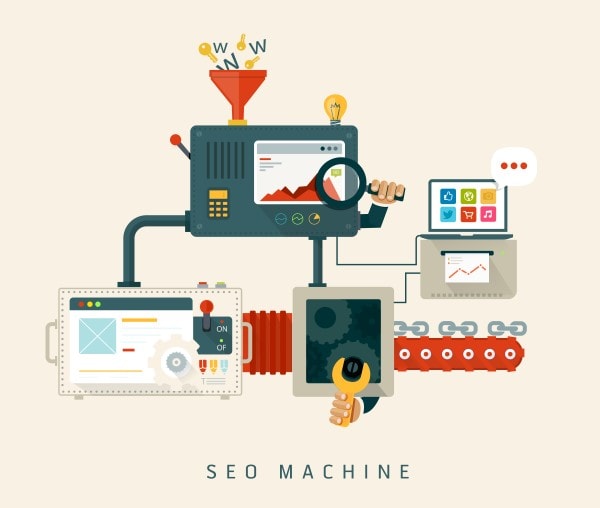
Consider that a modern SEO platform may contain many or all of the following features or modules:
- Keyword research tools (including search volume and keyword difficulty)
- Building effective keyword groups and content/topic clusters
- SEO competitor analysis
- SERP analysis tools
- Rank tracking (often with multi-year history)
- Backlink analysis and external link-building
- Website technical audits
- SEO reporting tools (for in-house and client reports)
- SEO content optimization and on-page SEO audits
- Internal link building
- AI writing assistants
- Other AI-assisted features
SEO toolkits may also bundle in other related capabilities, including PPC research and management tools, social media marketing features, etc. See Semrush’s full software suite as a good example of this.
The rapid ascent of artificial intelligence & machine learning (AI/ML) in SEO is another example of the increasing sophistication of SEO tools. SEO software makers are rapidly incorporating AI/ML technologies where they can, especially in AI-assisted content development.
Of course, not every SEO software tool tries to do everything for every possible use case. There are plenty of very targeted ‘single-purpose’ SEO tools out there, with reduced cost and complexity.
SEO Tools and Software Maintenance
Some SEO tools, such as keyword rank trackers, need to stay in sync with search engines (especially changing SERP features) and search algorithm updates. SEO tools require constant updates to make sure they are analyzing SERPs correctly and presenting accurate results.
For example, when Google (or Bing, YouTube, etc.) changes their SERP layout or SERP features, all the rank tracking tools need to adjust quickly or risk returning inaccurate results to their users.
SEO software also needs to keep in step with evolving SEO guidance, such as Google’s guidelines and best practices for webmasters and website owners.
This all drives essential and regular software maintenance that adds cost for SEO tools vendors.
Cloud-Based SEO Costs, 3rd-Party API Data, Etc.
SEO software products have major cost drivers such as cloud-based processing and data storage, bandwidth, API connector costs to 3rd-party data sources, etc.
Most SEO tools these days are 100% cloud-based. This has important advantages for both vendors and customers but also drives up cloud infrastructure costs for vendors as they handle more processing, storage, etc. in the cloud.
Ultimately, these infrastructure costs must be passed along to SEO software users per the various pricing tiers. This is especially true for multi-user customers such as larger enterprises and many SEO or digital marketing agencies handling multiple client projects concurrently.
Look at the pricing models for any SaaS-based SEO software tool and you’ll see how this works as the pricing and features change from the low to high paid tiers.
This is also part of the discussion of pros and cons of cloud-based vs desktop SEO tools. (Hint: desktop SEO applications typically don’t have any data limits.)
SEO tools providers often also pay for API access to 3rd-party data sources, so this becomes part of the overall product cost structure as well.
‘Free SEO Tools’ Aren’t Free (to the Vendor)
SEO software vendors often also supply free SEO tools, browser extensions, etc., that cost money to build, maintain, and promote. Since these tools are free, their costs must be covered by the revenue and cash flow driven by their paid pricing tiers.
These ‘free’ SEO tools also serve as promotional/marketing channels, so the costs to vendors of providing these tools are at least partly offset by new (paid) subscriber growth.
SEO Software Enterprise & Agency Pricing
The high-end paid tiers for SEO tools can drive the perception that SEO tools are expensive.
Particularly for larger enterprises and digital marketing/SEO agencies, costs can increase rapidly as these organizations add more users, features, and higher data limits for things like the number of distinct SEO projects allowed, keyword research lookups, rank-tracking data, reporting data rows, etc.
Overall, the higher-end pricing tiers can influence the perception that SEO software is expensive. The higher and more complex pricing levels tend to drive up the average monthly cost of SEO tools.
However, lower-end users can essentially ignore these tiers and just focus on the lowest one or two cost/feature bundles.
For larger firms and organizations, when compared to other mission-critical software applications (CRM, marketing automation, account-based marketing platforms, etc.), enterprise or agency SEO software costs may look quite reasonable.
Cost Impact of Global Software Development
SEO software vendors based outside the US, Canada, the UK, and Western Europe typically have lower software development and other professional labor costs, which gives them an advantage when developing and pricing SEO software tools.
These countries have a large pool of talented software developers and other IT professionals, as well as relatively low labor costs and attractive tax structures, which makes them attractive destinations for software development.
Additionally, many of these countries have strong government support for the software industry, which encourages innovation and development.
Not surprisingly, many of the cheapest SEO tools come from outside the US, Western Europe, and other higher-cost regions.
SEO Tools and Free Pricing Tiers
Access Premium SEO Software for Free
SEO software vendors use free trials and free tools to bring in new subscribers by offering potential customers an opportunity to test the software before making a purchase.
Free trials and tools allow potential customers to get familiar with the software and determine if it is suitable for their needs. This can be beneficial for both the vendor and the end user, as it helps to reduce marketing costs for the vendor and gives SEO practitioners the chance to try out the product before committing to it.
Free SEO browser extensions can also be beneficial for software vendors, as they help to increase visibility and bring in new subscribers. By offering free browser extensions, vendors are able to reach a wider audience and increase their overall user base.
Additionally, free browser extensions can help to build trust with potential customers, as it gives them the chance to try out the software before making a purchase.
Free and ‘Affordable’ SEO Tools Offer Alternatives for Many Users
Free SEO tools are a great way for smaller businesses and SEO users to handle key SEO tasks without having to invest in software. These tools can help track website rankings, analyze website performance, and identify keyword opportunities (especially long-tail keywords or keyphrases).
They can also help to optimize on-page content, identify backlinks, and analyze competitors.
There are many completely free SEO tools and methods available from Google, including Google Search Console, Google Trends, Google Keyword Planner, PageSpeed Insights, and several others.
Some of these are very helpful for doing free SEO keyword research, which is always an important SEO activity.
Premium/paid SEO software vendors will often offer a set of free SEO tools to everybody. As discussed above, this gives the vendors a way to introduce potential customers to their software, hopefully converting some to paid customers over time.
Of course, building, maintaining and promoting free ‘starter versions’ of SEO tools costs the vendors money. Ultimately, this all gets reflected in the paid tools’ pricing structures.
Why SEO Tools Are Expensive — Final Thoughts
Many Legitimate Drivers of SEO Tools Costs
In the end, paid SEO tools may seem like too heavy of a recurring expense burden for some people. They can piece together a decent SEO workflow based only on free tools and methods, saving their cash for other priorities.
And in other cases, SEO tools are an essential ongoing business expense. Yes, they may still seem costly at times, but their ROI is high enough to justify the ongoing expense.
As SEO software users, we need to appreciate that these tools, especially the major SEO platforms, are not cheap to develop, maintain, or market. Keeping up with the dynamics of major search engines is not an easy task.
As discussed above, SEO tools have many legitimate cost components/drivers. They also have a perceived value and ROI that supports their ‘free market’ pricing structures.
The good news is that even some of the paid SEO tools are affordable at entry levels, putting them within reach of even more casual or budget-strapped SEO users.
Questions or Comments?
What is your approach to using SEO tools?
Do you use only free SEO tools, or have you found one or more paid tools that work well in your situation?
Feel free to add more in the comments below with any thoughts, feedback, or related questions. Thanks also for any social shares on this post via the buttons below!
