
Last updated Apr 1, 2025
Grow Your Website Traffic with AI-Powered SEO Tools
Artificial Intelligence (AI) is one of the hottest tech topics on the planet today, and AI applications are seemingly everywhere — including the field of search engine optimization (SEO).
AI technologies have impacted SEO tools in numerous ways. Website owners/managers and SEO practitioners have many options for leveraging AI tools in their SEO-related work.
This post looks at AI SEO software tools and provides some insights, tips, and tools that you can start to implement immediately to boost your own SEO and website traffic.
Let’s take a closer look below…

This post contains a few referral links to select vendor partners. We may receive compensation for purchases made via these links, at no additional cost to buyers.
What Are ‘AI SEO Tools’?
A Wave of AI-Driven Features Hits the SEO Tools Universe
With a huge range of SEO tools available today, plus the rapid expansion of artificial intelligence (AI) technologies, it was clear that those two worlds would quickly meet.
And meet they did! AI is now embedded into many SEO tools today, either ‘under the hood’ or front-and-center in a very visible way for users.
In short, AI SEO is a form of search engine optimization that uses artificial intelligence to help improve a website or webpage’s organic search performance.
AI already plays a prominent role in the workflow of many marketers. For example, many marketers use generative AI to conduct topic research and create content.
AI is becoming increasingly embedded in content marketing, and SEO is usually a big part of that overall effort.

SEO Software with Integrated AI Features
AI Powers or Enhances Multiple SEO Software Capabilities
SEO tools with integrated AI features fall into a few categories that sometimes overlap or complement each other.
AI-enhanced features help SEO professionals and website owners in many areas, including:
- SEO content writing (including outlines and briefs through final copy)
- Topic research
- Keyword research (and keyword groupings)
- Topic clusters and content groupings
- Content optimization
- Website audits
- Internal linking optimization
- Overall SEO optimization and workflows
- SEO automation and scaling
AI-enhanced tools are now part of most modern SEO tools stacks. Let’s take a closer look at some of these areas and supporting AI SEO tools next.
AI SEO Writing Assistants — Faster Content Production
AI writing assistants have had the biggest and most visible impact on SEO practice in recent years.
These AI SEO writing tools, most notably powered by OpenAI’s ChatGPT, Google Gemini, and others, use Large Language Models (LLMs) to generate text copy for a wide range of use cases, including SEO content generation.
And while AI SEO writing tools have both pros and cons to consider, they are here to stay.
For SEO purposes, AI writers have both short-form and long-form copywriting use cases.
For example, you can use AI writing assistants to generate variations of HTML Title tags and meta descriptions as short-form AI use cases.
And, you can leverage AI writing tools to generate article outlines and full-length content pieces (e.g., long blog posts) that are ready for human review and editing/polishing into publication-ready pieces.
That is definitely a long-form use case for AI writing.
Several AI writing tools specialize in long-form content generation. Others try to handle all forms of AI-powered content within a single platform — from very short-form copywriting to full-length articles.
AI article outlines and content briefs are other use cases that fall somewhere between short-form and long-form content, but definitely in support of full-length deliverables.
The number of AI writing tools available is already a bit staggering, all competing for traction, growth, market share, and profitability.
Free AI Writing Tools
Some AI writing tools are completely free, at base levels at least. This puts definite pricing pressure on the ‘premium’ AI writing toolkits, which need to add even more value to justify a non-zero price tag.
Early major players in the area of free or ‘freemium’ AI writers are ChatGPT from OpenAI, Microsoft Copilot, Google Gemini, Perplexity AI, and Claude from Anthropic.
Each of these can be used — alone or in combination — to accomplish various AI writing tasks for free.
Related: Learn more here about how Google Gemini, ChatGPT, and Perplexity can help with SEO.
Paid/Premium AI Writing Assistants
Numerous vendors have also popped up to offer a more premium and integrated AI writing experience, often specifically with ‘SEO content’ in mind.
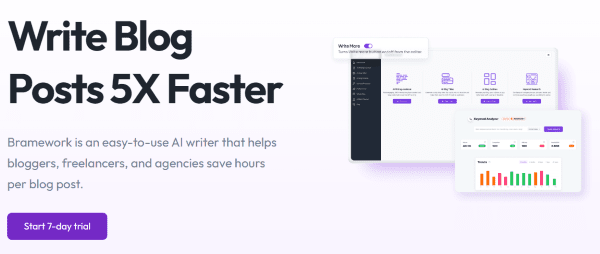
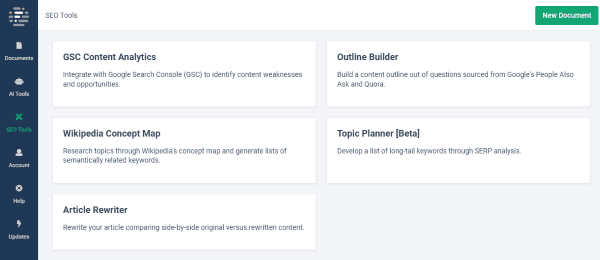
Examples include Wordplay, Frase, and Bramework as highlighted below.
But there are many others, too. Learn more here about long-form AI writing tools, which are directly relevant for SEO content tasks.
To date, I’ve used Wordplay, Frase, and Bramework on various content pieces. I think they’re all worth a good look for SEO content producers and optimizers.


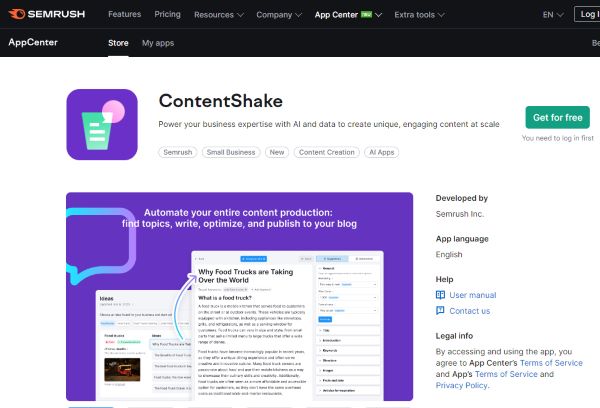
Of the major established SEO platforms (Ahrefs, Semrush, Moz, etc.), Semrush has done a good job of integrating SEO content development tools into its overall platform.
This includes elements of AI writing support, including the ContentShake app shown below.
Semrush also offers more SEO content development and optimization tools here.
Visit Semrush’s ContentShake Here
See the Complete Semrush Toolkit Here (SEO and Other Tools)
AI Keyword Research — Find More & Better SEO Keywords
Keyword research for SEO content planning and strategy is another area ripe for AI support.
AI can help automate and improve keyword research tasks, including understanding the semantic relationships between keywords, identifying search trends, and predicting user behavior.

AI brings new and exciting capabilities to SEO keyword research tasks by using machine learning algorithms and advanced data analytics to identify high-potential keywords that can help improve a website’s search engine rankings and drive traffic to the site.
AI-powered tools help SEOs gather information quickly and make smarter decisions around keyword targeting. From a single input, SEO professionals can generate a list of hundreds to thousands of keywords to consider for content production and optimization.
Related: Learn more here about using Reddit and Quora for SEO, including keyword research and other SEO-related tactics.
AI Keyword Research and SEO Vendor Partnerships
Since SEO keyword research and content development are so intertwined, some AI writing tools leverage other leading SEO vendors for keyword research data.
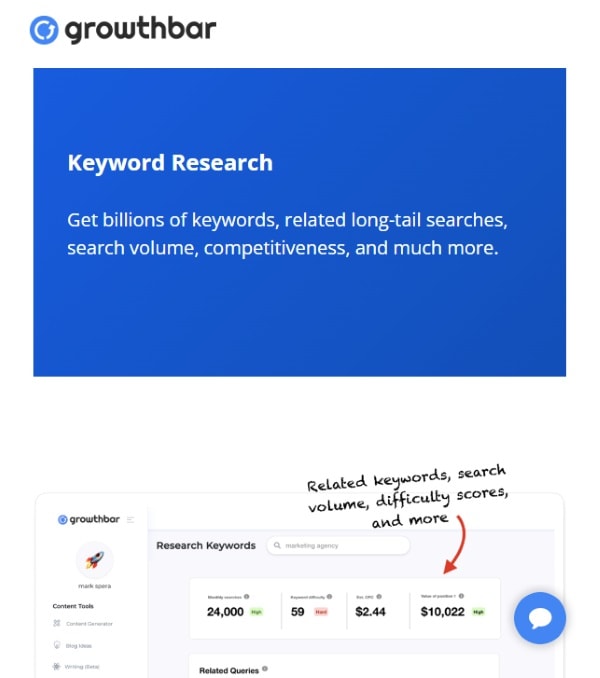
For example, Bramework uses Semrush’s massive keyword database and GrowthBar has partnered with SpyFu for keyword research metrics.
AI Keyword Groups and Topic Clusters — Smarter Content
Also related to keyword research and content planning are the concepts of keyword groups and topic clusters.
Supporting and enhancing traditional keyword research methods, AI-based keyword research tools help create smarter keyword groupings based on things like user intent, related topics, and word patterns.
These keyword groups then help SEO content planners and writers develop richer topic clusters for stronger coverage of target topics and content niches.
Want to stay updated on my SEO-related content? Add your email details below for periodic updates straight from me (David).
Your email info is safe here. We don’t sell, rent, or share your details with outside parties. You can easily unsubscribe at any time.
SEO Content Optimization — Improve Content with AI
Moving deeper into SEO content territory, AI tools can also help with content optimization tasks.
Aside from speeding the writing process, AI SEO tools can also:
- Help with topic research, outline-building, and search-optimized content briefs for more complete and robust topic coverage. This helps SEO content in related ways as well — such as longer word counts (when truly needed and justified), and more long-tail related keywords for better keyword coverage overall.
- Analyze SERPs for topic insights, SEO competitor analysis, and competitive scoring based on keyword and topic coverage.
- Identify good internal linking opportunities. See Link Whisper and LinkBoss for good examples of leveraging AI to improve internal linking.
- Identify important content gaps and keyword gaps.


AI SEO Site Auditing Tools — Better Site Problem Detection
Keeping a website or blog optimized for SEO purposes requires regular health checkups of the overall site and its content.
While this has traditionally been a manual activity (e.g., doing quarterly website audits), newer SEO tools with AI smarts are putting this more into autopilot mode.
For example, the automated ‘Diib Answer Engine’ combines analysis of your website analytics data, your website and competitor sites, and industry benchmarks to provide data-based guidance on website growth tactics.
This goes far beyond what a traditional website SEO crawler provides.
Diib also goes beyond just SEO suggestions, incorporating other channel insights and recommendations such as social media traffic as well.

AI WordPress Plugins — AI-Enhanced SEO & Content
A good way to see what’s happening in the world of AI SEO tools is to track what’s available for WordPress users in the way of AI-capable SEO plugins and content tools.
Some of the top results are shown below, but there are many more in this category.
Popular WordPress SEO plugins like Yoast SEO, Rank Math, All in One SEO, Squirrly SEO, and others have designed AI features into their already-robust SEO toolkits.
Other WordPress plugins are quite AI-centric from the start, often focused on adding generative AI content tools based on GPT models for WordPress site owners and content creators.

View WordPress ‘AI SEO’ Plugin Options Here
AI-Enhanced SEO Tools — More Options
Other AI-enabled SEO software platforms have come onto the scene as well.
For example, Alli AI (shown below) is positioned primarily for SEO agencies and enterprise teams that need to manage SEO for multiple websites and/or very large domains.
Alli AI is part of the move to automate and scale SEO activities for maximum team efficiency and SEO impact.

Are AI SEO Tools Expensive?
AI-Powered SEO Software Ranges from Free to Rather Expensive
The range of AI-enhanced SEO tools is already extensive and bound to grow even further.
As a result, the price range varies widely as well.
For example, you can already use ChatGPT, Microsoft Copilot, Google Gemini, Perplexity, and others for free as AI research and writing assistants. As ‘freemium’ AI assistants, they have paid upgrade options as well.
Other SaaS-based AI SEO platforms have different approaches to pricing. Some have a free or inexpensive base pricing tier and then move up in pricing as more features become unlocked. Others have more premium entry-level tiers.
Look for paid add-ons, which add greater functionality as well as monthly costs.
Pricing Examples
Frase starts at around US $38 per month if paid annually for a base plan.
View Frase’s latest pricing plans here.
Surfer starts at around US $79 per month (billed annually) for its ‘Essential’ base tier, with a menu of other paid add-on options.
View Surfer’s latest pricing options.
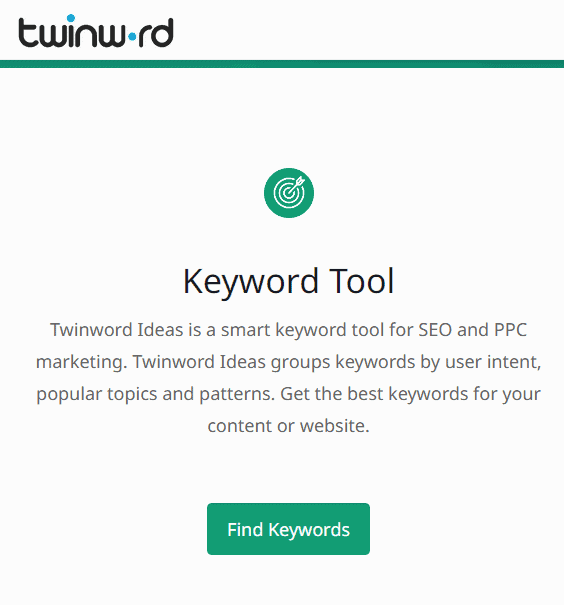
Keyword research specialist Twinword starts at around $12 per month for annual plans.
View Twinword’s latest pricing.
In contrast, for SEO agencies and enterprise-level SEO, Alli AI starts at around $141/month (annual plan) and moves up from there.
Alli is clearly positioned for larger-scale SEO needs, not for solo bloggers or small businesses with single small-ish websites to optimize.
Getting Started with AI SEO Tools
Many Ways to Start Using AI in SEO Practice
For many SEO practitioners, the entry point for AI use will be the writing assistants — either free or paid tools based on generative AI.
Others may want to start with AI more behind the scenes, perhaps as topic research aids, outline builders, or AI-assisted keyword research.
As always with SEO software options, look for free trials, free starter/basic tiers, or low-cost entry tiers that are technically paid levels but unlock basic but still useful feature sets.
For those who have already invested in a more traditional/established SEO platform (Ahrefs, Moz, etc.), be sure to keep an eye on their AI developments so you can incorporate them where they make sense for you.
With luck, you’ll get some new AI freebies from them at no additional cost. Perhaps more likely, they may charge more to unlock new AI capabilities.
Watch Out for ‘Fake AI’ Features
Take it from me as a former tech product marketer and corporate marketing guy — the temptation for marketing/product teams to latch onto hot new terms (like ‘AI’) and overuse them is always present.
So, just watch out for so-called ‘AI SEO features’ that aren’t actually AI-driven.
For example, basic SEO keyword rank tracking does not require AI.
Nor does basic SERP scraping and competitor content deconstruction to analyze header structures (h1-h6), provide word counts, etc.
Dig Deeper for Evidence of True AI
One way to determine if an SEO tool is really AI-driven is to research the tool and its features. Look for information about the tool’s AI capabilities on the vendor’s website, in product documentation and blog posts, and in reviews from reputable sources.
You can also reach out to the vendor directly and ask for more information about their AI capabilities.
Another way to determine if an SEO tool is really AI-driven is to try it out for yourself. Many tools offer free trials or demos that allow you to test their features and see how they work.
Pay attention to how the tool performs tasks such as keyword research, content optimization, and data analysis. If the tool is able to perform these tasks quickly, accurately, and perhaps with unexpected useful insights, it may be using AI.
It’s important to carefully research and evaluate any tool before using it to ensure that it meets your needs and has the capabilities it claims to have. It’s always a good idea to read reviews and compare features before making a decision.
No Single Definition of AI
It’s also important to note that the term ‘AI’ can mean different things to different people, and there is no standard definition of what constitutes an ‘AI-driven’ SEO tool.
Some tools may use basic machine learning algorithms, while others may use more advanced techniques such as natural language processing or deep learning.
Ultimately, the most important thing is whether the tool meets your needs and helps you achieve your SEO goals.
Like this post? Quickly share it with your social networks here.
AI SEO Software Tools — Closing Thoughts
AI Features in SEO Tools Will Expand Rapidly
Over the next 5-10 years, we can expect SEO software tools to continue to evolve quickly in the area of AI support. AI is poised to revolutionize the future of SEO, transforming the way search engines operate and how businesses optimize their online presence.
Some areas of SEO software that are most likely to see AI-driven advances include keyword research, trend analysis, content development and optimization, SEO opportunity recommendations, and SEO task automation.
In the near future, we can expect AI SEO tools to continue to evolve and provide even more in-depth insights into improving website rankings.
Questions or Comments?
I hope this discussion of AI SEO software tools and features has been helpful.
- How do you use AI in your SEO work today? Is it working well and producing positive results?
- Which SEO tools have you found that use AI most effectively? Have any AI SEO tools been a disappointment for you so far?
- How do you expect AI to impact your website and SEO work over the next few years?
Feel free to add more in the comments below with any thoughts, feedback, or related questions. Thanks also for any social shares on this post!
