
Last updated Apr 10, 2025
Search Engine Optimization for Brochure-Style Websites
Some business websites are essentially online marketing brochures — hence the term ‘brochure website’ that I use throughout this post.
Often small in size and with limited content, brochure-style websites have several important limitations when it comes to SEO for organic search visibility and traffic.
Still, there are ways to improve SEO for brochure websites. Some of them are pretty straightforward.
Let’s take a closer look below…

This post contains a few referral links to select vendor partners. We may receive compensation for purchases made via these links, at no additional cost to buyers.
What Is a ‘Brochure Website’?
Basic Online Presence for Company & Product/Service Information
A brochure website is a type of business website designed to mimic the format and function of a traditional printed marketing brochure. It typically consists of relatively few pages showcasing key information about the company, its products or services, and contact details.
Just like a traditional printed brochure, a brochure-style website focuses on providing an overview rather than offering extensive information or user experience functionality.
Brochure Website Characteristics
- Limited pages — Focuses on concise and essential information for new customer prospects and existing/returning customers.
- Simple navigation — Easy to navigate, often with a single landing page or a few interlinked pages.
- Visually appealing — Utilizes attractive images, graphics, and clear layouts to engage visitors.
- Call to action — Encourages visitors to take a specific simple action, such as contacting the company or learning more.
- Limited interactivity — Offers minimal or no interactive elements compared to more complex websites, such as B2C e-commerce sites with complete purchase transaction capabilities.
Brochure websites have several common pros and cons, as noted here.
Brochure-Style Websites — Pros
- Cost-effective — Easier and cheaper to develop and maintain compared to full-fledged websites.
- Easy to update — Information can be readily updated without requiring complex coding or special skills.
- Mobile-friendly — Often optimized for mobile viewing due to their simple design.
- Focused message — Clearly conveys the essential information about the business along with the products and/or services it offers.
- Ideal for specific purposes — Well-suited for businesses with a limited product range or simple service offerings.
Brochure-Style Websites — Cons
- Limited functionality — Lacks features like online transactions, user accounts, or complex content management.
- Less engaging — May not be as captivating for users seeking deeper information or interactive experiences.
- Limited SEO potential — Typically does not rank as well on search engines due to limited content breadth and depth. Also, brochure-style websites often have very weak (or non-existent) SEO characteristics. (See more on this below.)
- Not suitable for all businesses — Businesses with complex offerings or requiring user interaction might not be well-served by a brochure website.
Overall, brochure websites are a good option for small businesses, startups, or organizations with a clear and concise message to convey. They are cost-effective, easy to manage, and suitable for specific purposes.
However, they lack the depth and functionality of complex websites and might not be ideal for businesses requiring extensive online presence, user engagement, or traffic growth from organic search (the SEO angle).
Who Uses Brochure-Style Websites?
Brochure websites are suitable for a variety of business types, especially as a starting point for an online presence.
B2B examples:
- Small B2B companies — Smaller B2B firms, often at the lower end of the SMB size spectrum, may have brochure-style websites primarily as validation for their company and solutions offered. They often do not rely on (or optimize) the site for B2B lead generation purposes.
- Small B2B agencies or service providers — Offering very focused niche services, these firms can effectively showcase their offerings with a clear and concise approach.
- Independent B2B consultants — Offering expertise in specific business areas, they may not require complex functionality beyond showcasing their skills and experience.
- Freelancers — Similar to consultants, freelancers serving B2B clients can utilize a brochure website to present their portfolio, services, testimonials, and contact information.
B2C examples:
- Local businesses — Restaurants, cafes, or shops with a limited online presence can effectively convey their location, offerings, and contact details. Online reservation features (e.g., restaurant reservations) and on-site service appointment bookings are also common here.
- Service-based businesses — Painters, plumbers, or other home service providers can use brochure websites to showcase their services, pricing, and customer testimonials.
- Artists or creatives — Photographers, designers, or musicians can use a brochure website to present their work portfolios, contact information, and booking options.
Brochure websites also commonly include links to key social profiles, aiming to drive further visitor attention and engagement on social platforms, rather than on the website itself.
Now let’s dive further into the SEO-specific challenges facing many brochure-style websites.
SEO and Brochure Websites — Common Problems
Brochure Websites Often Have Serious SEO Limitations
Websites that are primarily just online marketing brochures commonly suffer from several SEO disadvantages. Historically, SEO has just not been a high priority for these sites.
Here are some of the main areas to evaluate.
Limited Content for SEO Purposes
Brochure-style websites usually have limited content, at least by initial design. It’s limited to the company, products and services, customer segments served, team bios, contact information, links to social profiles, etc.
Essential baseline information, for sure, but still limited.
Further, the existing site content can remain static for months at a time, only getting updated when new product/service features come online.
This lack of content depth and ‘freshness’ makes it harder for the company to rank well and improve organic search visibility beyond queries for the company by name and its branded products and services.
In other words, it’s easy to find the company by name when searching on Google, but the website drops like a rock in rankings when the search queries get more generic, like when searching for product/service solutions more generally.
This is a core SEO visibility problem with brochure websites.
Lacking Simple On-Page Optimizations
With an initial emphasis on visual appeal and providing information essentials, brochure websites often have no serious ‘on-page SEO’ optimizations in place.
For example, they may have no strategic keyword focus (other than brand terms) per page, missing or weak HTML tags like Title tags and meta descriptions, poor page structure/formatting, weak or cryptic URLs, and other common on-page SEO problems.
Unutilized SEO Features and Tools
Brochure websites are often built using content management systems (CMS platforms) that have good built-in or add-on SEO capabilities and tools in place.
However, these readily available SEO tools are often ignored, misused, or underutilized on brochure websites. There’s a big difference between having or installing an SEO toolkit on a CMS and actually using it effectively.
Images Too Large
Striving for strong visual appeal and marketing impact, many brochure-style websites have images in place that are simply way too large in terms of file sizes. This can add up quickly, leading to page bloat and slow-loading pages that both users and Google dislike.
Slow Performance
Nobody likes a slow-loading website. Not users, and not search engines that decide your organic rankings and visibility.
As noted above, overly large images can be the main culprits here. Other factors, such as slower shared hosting plans, lack of good page caching, lack of CDN usage, and other SEO-impacting website hosting issues can also contribute to page speed problems.
Stale or Non-Existent Blog
Related to the (lack of) content depth issue noted above, brochure websites may include inactive blogs or no blog at all.
To be sure, not every brochure website needs to have a blog component. But from an SEO perspective, an active blog can be an effective asset for driving organic search traffic.
This is especially true for non-branded search queries like general product/service queries when someone is searching for potential solutions to a specific problem.
Over time, a growing blog — with both new and updated content — can become your leading source of inbound traffic from organic search. (It has for my websites.)
It’s also a great way to build out content topic clusters and boost internal linking opportunities. Both of these help SEO as well.
Brochure Websites and B2B Lead Generation
For B2B companies with smallish brochure-style websites, the value of the site for lead generation purposes is more limited.
Especially for potential prospects who have never heard of you or your products, and are therefore much less likely to find you on their own.
As I mentioned above, these sites are often useful more for validation purposes, after a prospect has already become aware of you through other B2B marketing and sales efforts — such as direct sales outreach, industry events, industry media display advertising, etc.
In these cases, the brochure website is good for:
- Brand awareness — Increasing brand visibility and establishing legitimacy for potential customers and clients, especially those who already know you by company name at least.
- Initial information — Providing essential information about the company, products, and services, giving potential new leads a starting point for further research.
- Contact information — Making it easy for potential leads to reach out through contact forms or email addresses, facilitating initial communication and further prospect engagement.
While brochure websites still provide value for B2B sales and marketing teams, they typically aren’t so great for lead generation efforts. Here’s why:
- Limited lead capture — Lacking features like lead capture forms, making it difficult to collect valuable information from potential leads.
- Passive approach — Adopting a passive marketing approach, relying on visitors to take initiative rather than actively engaging them and guiding them towards conversion.
- Poor SEO — Making it harder for potential leads to find the website organically through important topic search queries, as I discussed above.
- Lack of engagement — Remaining static and unengaging, failing to capture the attention of complex B2B buyers who might require in-depth information and more interactive experiences.

Overall, brochure websites are not ideal for B2B companies with serious lead generation goals. While they offer basic functionality and information for B2B buyers, they lack the necessary features and engagement strategies to effectively capture and nurture leads in the complex B2B landscape.
B2B companies should consider investing in websites with features like:
- Content marketing — Blogs, white papers, case studies, and other valuable content to attract and educate potential leads.
- Lead capture forms — Forms strategically placed to collect valuable information from interested visitors.
- Calls to action — Clear and compelling prompts that encourage visitors to take specific actions like downloading content, requesting a demo, or signing up for free trials.
- Account-based marketing (ABM) support — Capabilities that support ABM programs, such as visitor-based personalization and website visitor tracking for ABM targets. See Leadfeeder’s ABM capabilities as one example of this.
- SEO optimization — Strategies to improve search engine ranking and website visibility. (See more on this below.)
- Interactive elements — Engaging features like calculators, product demos, or interactive infographics to capture and hold the attention of potential leads.
By incorporating these elements, B2B companies can create websites that actively attract, engage, and convert potential leads into valuable customers.
Want to stay updated on my SEO-related content? Add your email details below for periodic updates straight from me (David).
Your email info is safe here. We don’t sell, rent, or share your details with outside parties. You can easily unsubscribe at any time.
Related: Learn more about identifying weak B2B SEO competitors and taking advantage of these competitor weaknesses.
Basic SEO Fixes for Brochure Websites
Focus on Simpler SEO Optimizations First
Brochure websites often haven’t had much SEO work done on them in the past, so there are usually several SEO opportunities that are ‘low-hanging fruit’ for brochure-style website owners who want to put some time and energy into this area.
Here are several important areas to look into first.
Free SEO Tools and Analytics
First, develop a basic awareness of the many free SEO tools and methods that are available to all website owners today.
These include popular free Google tools like Google Analytics and Google Search Console (GSC), Bing Webmaster Tools (BWT), basic free keyword research techniques and tools, free backlink profile checkers, free AI writing tools like ChatGPT, Google Gemini, and Microsoft Copilot.
Do these as part of a basic ‘SEO minimalist’ approach:
- If it’s not in place already, take a few minutes to get your site set up and validated with Google Search Console. This will help tremendously with Google SEO performance metrics and other important Google Search insights over time.
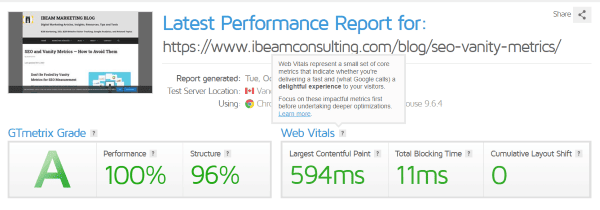
- Run a quick and free page speed analysis on your 2-3 most important pages. Use GTmetrix and/or Google’s PageSpeed Insights (PSI) tool for this. The detailed results may look quite technical and complex, but you’ll also get a basic overall summary of how fast (or slow) your site is.
- Check your site-building platform/CMS to see what SEO optimizations may already be in place. Look for built-in SEO features, plugins, and other tools that may already be available to you.
You can evaluate several of the areas noted below with good SEO site auditing tools and Google Search Console.
Pro Tip: Some paid SEO auditing tools also offer at least basic website audits for free. SEO PowerSuite’s WebSite Auditor application is one example (look for the ‘free forever’ version).
On-Page Optimizations
- Target relevant keywords — Research and identify keywords relevant to your business, products, and services. Use these keywords strategically throughout your website content, including page titles, meta descriptions, headers, and image alt text.
- Optimize HTML page titles and meta descriptions — Craft compelling and informative HTML titles and descriptions for each page. Titles should be concise (around 60 characters) and accurately reflect the page content. Meta descriptions should be around 160 characters and entice users to click on your website in search results.

- Improve website content — Ensure your website content is high-quality, informative, and relevant to your target audience. Use clear and concise language, break up text with sub-headers (typically h2-h4 levels) and visuals, and provide valuable insights into your company’s offerings.
- Leverage internal linking — Create a logical website structure with clear navigation and internal links connecting relevant pages. This helps search engines understand your website’s content and improves user experience.

- Optimize images — Ensure that your website images are optimized for SEO, with proper sizing, compression, alt text, useful filenames, etc. Learn more about image SEO best practices, including improving image SEO for WordPress sites.

Technical SEO Corrections
Use Google Search Console, site auditing tools, and page speed testers for the following three checks.
- Mobile-friendliness — Ensure your website is mobile-friendly and responsive across different devices. Google prioritizes mobile-friendly websites in search results.
- Website speed — Improve website loading speed by optimizing images, minimizing code, and using a reliable website hosting provider. Faster websites rank higher and offer a better user experience.
- Structured data — Implement structured data markup to provide search engines with additional information about your website content, such as your business address, contact information, and product information.
Off-Page Optimizations
- Local SEO (if applicable) — If your business has a physical location and serves specific locales, claim your Google Business Profile listing and also ensure that your NAP (Name, Address, Phone number) details are consistent across online directories. Paid SEO tools with good local SEO features can be very helpful here.
Other Longer-Term SEO Optimizations
- Build backlinks — Backlinks are links from other websites pointing to yours. Earning backlinks from high-quality, relevant websites may significantly improve your website’s authority and ranking in search results.
Pro Tip: The ongoing significance of backlinks as a top ranking factor in SEO is under some debate in the industry. Learn more here about how to rank without backlinks. This may be a more pragmatic approach for businesses that want to improve their brochure website’s SEO without ‘over-investing’ in this activity.
- Refresh and update older content — Budget some time and resources to keep your website content fresh, especially in your core topic areas and most important product and services pages. Follow the SEO tips provided above as you do this, especially the on-page SEO optimization tasks.
- Build out completely new content — Similarly, devote some time and energy to ‘beefing up’ your brochure website with completely new content pieces. These could be blog posts/articles, other written content formats like case studies, testimonials, tutorials, white papers, etc., or multimedia content such as embedded videos.
- Leverage your social profiles — In both B2B and B2C situations, sharing content through your company’s (and key employees’) social profiles can build traffic and also encourage more organic backlinking activity to your site.

Remember:
- Consistency is key — Regularly update your website content and engage in ongoing SEO efforts to maintain and improve your website’s search ranking.
- Track your progress — Use website and SEO analytics tools (Google Analytics or GA alternatives, plus Google Search Console) to monitor your website traffic, identify areas for improvement, and track the effectiveness of your SEO efforts.
The tactics outlined above can help improve your brochure website’s visibility in organic search, lifting you above competitors who have similar sites but do not take these SEO-boosting actions.


Pro Tip: SEO software tools range from free single-purpose utilities to rather expensive enterprise-class SEO platforms. Learn more here about options for more affordable SEO tools, plus more on popular all-in-one SEO toolkits.
Like this post? Quickly share it with your social networks here.
SEO for Brochure Websites — Closing Thoughts
Improving SEO for Brochure Websites is Very Doable
As discussed above, company websites that serve primarily as online marketing brochures have inherent challenges in the area of SEO.
However, many of these brochure websites also have SEO opportunities, some of which aren’t very difficult to pursue.
In fact, many brochure-style websites have what I call ‘low-hanging fruit’ opportunities for SEO improvements, due in large part to the typical lack of prior attention paid to these areas.
With some additional focus on high-priority SEO areas, companies can turn their brochure websites into better assets for driving organic search traffic, lead generation, new customer activity, and revenue growth.
Questions or Comments?
I hope this discussion of SEO for brochure websites has been helpful! I’ll close with just a few related questions for you:
- Do you consider your current company website to be a ‘brochure-style’ site today? What, if any, improvements would you like to make to it?
- What are your current site’s SEO weaknesses? How do they potentially impact your business?
- How does your website compare to your main competitors’ websites? In what areas is it better? How is it potentially worse?
Feel free to add more in the comments below with any thoughts, feedback, or related questions. Thanks also for any social shares on this post!
