
Last updated May 16, 2025
Your Google Rankings Changed — Why Did That Happen?
10+ Reasons Behind Search Ranking Shifts
When our organic search rankings change — for better or worse — it’s natural to wonder why.
We want to understand why our website content is ranking higher or lower on Google, for example, and how to fix the most serious SEO issues.
This post looks at 10+ areas to consider and understand as organic search rankings move up or down. It’s especially intended for ‘layman’ website owners and SEO newbies.
Read on to learn more about why organic search rankings change, plus other resources and tools to help improve your SEO.

This post contains a few referral links to select vendor partners. We may receive compensation for purchases made via these links, at no additional cost to buyers.
Why Organic Search Rankings Change
A Broad Overview of What Impacts Organic Search Rankings
What a great feeling it is to build and publish a piece of website content, see that new content start to get noticed by Google and other search engines, then climb in the search rankings and produce ‘free’ website traffic over time.
That’s why we create ‘SEO content’, right? Because we want to drive valuable website traffic for months and years to come, without paying endlessly for it via PPC ads, paid social ads, etc.
When we see organic search rankings and website traffic improve for our target keywords or search queries, we’re happy.
When we see search rankings and traffic drop for an extended period, we’re not happy. We want to know what happened and how we might be able to turn things around.
Related: Learn more about how high rankings drive free website traffic from SEO.
The rest of this post looks at some of the primary reasons our search rankings change. It’s a high-level overview and framework for thinking about this aspect of SEO.
Let’s get started…
1. Basic Search Algorithm Adjustments
The absolute simplest answer to ‘Why did my organic search rankings change?’ is this:
‘Because the search engine algorithm made it happen.’
No matter which search engine we’re talking about — Google, Bing, Yandex, YouTube, Baidu, DuckDuckGo, etc. — that engine is the final judge and jury about where your website content should rank vs all potential competitors for a particular user search query.

The Google algorithm(s), for example, calculate positions using hundreds of ranking variables (‘ranking factors’) that we as mere mortals are not allowed to understand completely.
We do know that Google makes thousands of minor (and some major) ranking algorithm updates and SERP feature changes each year, in the normal course of conducting their business and trying to be the best ‘go-to’ search engine for users.
Now, with generative AI features like AI Overviews present for many user queries, the SERP dynamics get even more interesting.
The main point here is that your content rankings in Google and other search engines can move around naturally, just in the normal business of organic search, even without major disruptions to the underlying algorithms.
This is one of the reasons why spending too much time and manual effort on keyword rank tracking is generally a waste of time. It’s much better to allocate that SEO time to more productive activities like producing fresh web content, improving older content, new keyword/topic research, building internal links, fixing technical SEO issues, etc.
2. Major Search Algorithm Changes
Aside from the usual day-to-day ranking fluctuations that may impact your website ranking positions, we also know that Google makes a handful of major algo updates each year — called ‘core algorithm updates’.
These are more likely to cause widespread ranking changes or fluctuations for millions of websites around the world.
Depending on the nature of your site and content, you may see a big impact from a Google core algorithm update. Or you may see very little impact.
It really all depends on exactly how the specific algorithm change applies to your content and the search queries that normally drive impressions for your website pages.
To follow these changes more closely, see this post about Google algorithm update trackers.
To view a current example of daily SERP fluctuations, see the embedded graph from Semrush below. (This is their ‘Semrush Sensor’ tool.)
3. Gain or Loss of Google Featured Snippets (SERP Features)
If you’re already one of the top-ranked search results in Google for a particular search query (keyword or keyphrase), you may find yourself earning a much-coveted Google ‘Featured Snippet’ in position one or two at the top of the organic search results.
This gives your page or post added visibility and increased opportunity for organic click-throughs to your site.
Here’s an example in the red box below:
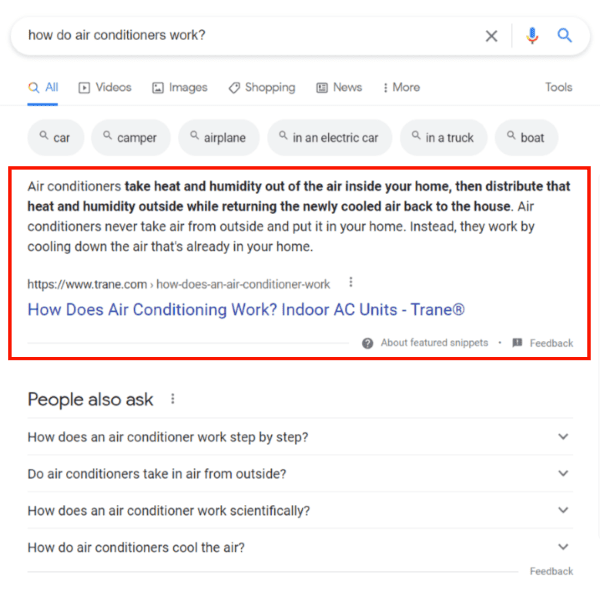
So, you may find your website gaining or losing Featured Snippets for various user search queries, all in the normal course of day-to-day ranking changes and Google (or Bing, etc.) SERP feature changes.
In other words, it doesn’t take a major algorithm update to cause changes in Google’s Featured Snippets.
Also, the presence or absence of Google AI Overviews in the SERP for a specific user query may or may not impact your actual ranking position in the usual organic results. In my experience so far, AIO visibility seems rather independent and random vs organic ranking positions.
Note that many good SEO rank tracking tools and SERP analysis tools will indicate which SERP features are present for specific keywords/queries and if you have ‘won’ any of them.
4. Your Content Changes
When you change or update your website content in just about any way, search engine crawlers and bots (Googlebot, Bingbot, etc.) will eventually detect these changes and bring this new information back to the search algorithm(s) for assessment.
Your content changes may result in meaningful and lasting search ranking changes, or they may not.
Common examples of content changes include:
- Minor text/copy tweaks (simple editing adjustments)
- Changes to headings, sub-headings, etc.
- Intentionally adding to or reducing the word count
- Strengthening existing keywords and keyphrases
- Intentional addition of new target keywords and keyphrases
- Adding or adjusting images, alt text, captions, etc.
- Improving internal linking between content
- Finding and fixing ‘orphan content’ problems
- Adding or adjusting structured data elements
- Changes based on TF-IDF analysis, AI-based content optimizers, etc.
- Changing the URL
- Adding or changing the Title tag and/or meta description
- Optimizing for page speed improvements (faster load times)
These types of content modifications fall under the category of ‘on-page SEO’ or ‘on-site SEO’. They are completely under your control as the website owner/manager, webmaster, and/or SEO team.
Keep in mind that any ranking changes that may result from these changes will not typically happen overnight. There is an unknown time lag in play here.
Related to performance improvement timing issues in SEO, also see this case study on how fast SEO works.
5. Your SEO Competitors’ Content Changes
While you’re busy working on your own content and SEO improvements, your primary SEO competitors may be doing the same.
If you’re lucky, your competitors are distracted by other things, giving you a chance to build a competitive content and SEO advantage.
But you may not be that lucky. Assuming your competitors are actively trying to beat you (and others) in the Google SERP is always a safer bet.
In any case, content changes made by your SEO competitors may directly impact your search rankings.
If they improve their content quality and relevance relative to yours, then your rankings should eventually drop.
On the bright side (for you), if your competitors let their content decay in quality and/or relevance (as judged by Google, Bing, etc.), then your content should get a rankings boost.
Related: Learn what SEO content decay is here, including ways to find, fix, and prevent it.
To keep an eye on your SEO content competitors, consider these SEO competitive analysis factors and some of the SEO tools that help with competitor analysis.
On the topic of content quality, also see this post and brief SEO case study on how Google E-E-A-T factors may impact search rankings.
6. A New SEO Competitor Has Arrived
For many companies, organizations, and website owners, the competitive landscape is fairly well established and doesn’t change much from month to month (or even year to year).
The same is often true for your primary ‘SEO competition’ — those websites that dominate the search rankings, page 1 Google SERP, etc., for your main target keywords, keyphrases, and search topics.
However, sometimes a completely new face will appear in the organic search results for your target keywords and search queries.
Perhaps a new vendor entering your product or service segment, and with enough SEO clout to earn their way into SERP prominence.
Or maybe a formerly weak SEO competitor (e.g., Google page 3-5) who has somehow managed to earn their way into much better visibility.
If and when this happens, it can mean a surprise rankings drop for you, and a loss of organic traffic.
Monitoring for this possibility is another benefit of automated rank tracking tools and organic SERP analysis tools.
Doing your own manual rank spot-checks and visual SERP inspections from time to time is also helpful.

Want to stay updated on my SEO-related content? Add your email details below for periodic updates straight from me (David).
Your email info is safe here. We don’t sell, rent, or share your details with outside parties. You can easily unsubscribe at any time.
7. Your Backlink Profile Has Improved or Worsened
The number and quality of external backlinks pointing to your website (and specific pages or posts) are known ranking factors for Google and other search engines.
This is why many webmasters and SEOs spend time and resources building backlinks to improve their overall backlink profile.
Others spend almost no time or money on proactive backlink building, and just let this happen naturally and organically over time as others discover their content and choose to link to it.
Of course, effective social promotion via platforms like X/Twitter, Facebook, LinkedIn, etc., can help expedite this content discovery — with more organic backlinks to follow, hopefully.
Whatever your approach may be on external link-building, the growth or decay of your backlink profile can definitely impact your search ranking changes in either direction.
Related: To learn more, see this post on backlink profile analysis and tools.

8. Competitor Backlink Profiles Have Changed
Just as your website’s backlink profile can and will change over time, your SEO competitors will see their backlinks change too.
Some of this competitive backlink activity will be passive and organic on their part, while other SEO competitors may be on aggressive link-building campaigns in an effort to boost their rankings for key content.
Either way, backlink profile changes for your SEO competitors can result in relative losses or gains for your own rankings.
If you have well-defined commercial competitors who are also your SEO competitors, you may want to monitor their backlink profiles with either free or paid SEO tools that focus on this task.
Many of the cheaper and more affordable SEO platforms also provide competitor backlink analysis features.
9. Temporary Website Outage or Downtime
For unexpected search ranking drops, a less likely but still possible culprit is a website outage or temporary downtime event.
For example, if Googlebot swings by to crawl your site, but can’t reach it for whatever reason, then Google may determine that your site is unreliable and less worthy of showing in search results.
Other search engines may come to similar negative conclusions, depending on their crawl frequency and how they perceive downtime issues.
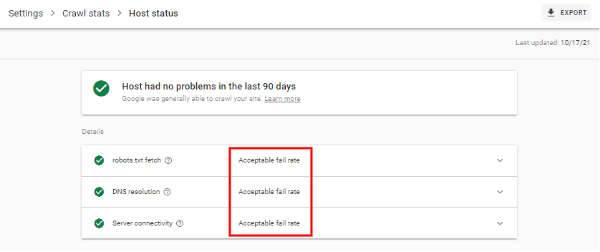
See this brief case study based on an actual website outage. It includes the reporting from Google Search Console shown below.

In any case, it’s worth periodically monitoring the Crawl Stats report in Google Search Console to make sure that Google is not having issues crawling your site.
Here’s how that looks.
Related: Also see this post on performing SEO audits with Google Search Console.
10. Other Major Website Changes
Other website changes can also impact SEO rankings, especially if they are major site-wide updates.
Things to watch out for include:
- Moving an entire site from one platform to another (e.g., CMS changes)
- Major URL restructuring
- Moving content across domains
- Changing a website theme or framework (e.g., WordPress theme changes)
Usually, the concern here is about potential negative SEO impacts.
However, if the changes include a site-wide benefit, such as moving to a faster web host or implementing a CDN for global speed improvements and better user experience (UX), then we hope to see this reflected in positive overall search rankings changes.
If major site changes are a concern, it’s best to plan ahead with the help of website and SEO consultants who have handled these moves before.
11. Multiple Concurrent SEO Factors
More likely than not, several of the above rank-impacting things are happening all at once.
This multivariable scenario makes it hard, and often impossible, to pin down exactly why your search ranking change over time.
The cause-and-effect relationship just isn’t always super clear.
And the common time lag between making SEO changes under our direct control, and seeing something happen in search rankings, can make the correlation that much harder.
So, we make our best-educated guesses, check with SEO industry experts and Google resources, and try to apply ‘best practices’ based on imperfect and incomplete information.
Resources for Improving SEO & Search Rankings
Wide and Deep Range of SEO Insights & Tools
SEO and search engine marketing (SEM) are such huge fields of study that it’s hard to provide a truly comprehensive and prioritized list of resources for more information. It would be a very long list, indeed!
However, here are some good places to start, along with a few more related posts from this blog.
Google SEO Resources
SEO Industry Media
SEO Software Vendor Blogs
Related Posts from This Blog
Top Things I’ve Learned About SEO
How Long Does SEO Take to Work?
SEO Case Study — Search Ranking and Google E-E-A-T
Good SEO Certification and Training Options
Like this post? Quickly share it with your social networks here.
Understanding Search Ranking Changes — Closing Thoughts
Get Comfortable With Not Controlling Everything
The areas outlined above provide at least a basic framework for thinking about changes in organic search rankings and the many factors that can come into play.
Knowing that many of the rank-impacting issues noted above are usually active simultaneously, and that root cause determination (causality) can be very hard to pin down, helps us to maintain a healthy and productive perspective on the science and art of SEO work.
At the end of the day, organic search visibility is always at the mercy of the search engine algorithms and the programmatic decisions they make.
Though we can’t directly control our search rankings, we can greatly and positively influence them over time by following website and content best practices and some basic SEO essentials.
Questions or Comments?
I hope this article on understanding search ranking changes has been helpful. I’ll close with a few related questions for you:
- How often do you monitor keyword rankings for your website and specific pages, posts, and articles?
- Which of your proactive content changes or updates seem to have the greatest impact on rankings?
- Are you able to correlate your ranking changes with major Google algorithm updates?
Feel free to add your own insights in the comments below with any thoughts, feedback, or related questions. Thanks also for any social shares on this post!
