
Last updated Apr 19, 2025
B2B SEO Insights, Tactics, and Tools for Success
How does SEO differ for B2B marketers? What are the priorities and objectives for B2B SEO vs other types of SEO work?
Do some SEO tools work better for B2B firms, or are the available software tools and platforms all just ‘general-purpose’ SEO tools?
This post takes a closer look at SEO for B2B firms, with insights, tips, and tools that can assist B2B SEO teams with their work.
Let’s dive right in…

This post contains a few referral links to select vendor partners. We may receive compensation for purchases made via these links, at no additional cost to buyers.
B2B SEO — What Is It?
Understanding Search Engine Optimization for B2B Companies
For B2B (‘business to business’) marketers, SEO can be an important driver of website traffic and new customer opportunities. It is often one of several tactics used to engage sales prospects and sell the B2B company’s products and services to them.
But is there anything special about B2B SEO?
Is it any different from doing SEO for a B2C retailer, e-commerce, or a local brick-and-mortar shop on Main Street?
The answer is yes — there are some notable distinctions between B2B SEO and other forms of SEO work.
There are also plenty of overlapping characteristics, so doing SEO for B2B companies is not completely different from SEO for other organization types. Many of the standard SEO techniques, tips, and tools work great in B2B SEO as well.
B2B SEO vs B2C SEO
Let’s take a quick look at some important characteristics of B2B SEO vs the B2C (‘business to consumer’) model.
B2B SEO differs from B2C SEO in several ways, including:
Longer Sales Cycles
B2B sales cycles tend to be longer and involve multiple decision-makers. B2B SEO needs to account for this by providing content that addresses each stage of the buyer’s journey, from awareness to consideration and decision-making.
This often requires more in-depth and educational content, with different job titles and decision-making priorities within each target audience. (See more on this in the ‘personas’ discussion below.)
B2B buyers are also typically more research-oriented than B2C buyers. They are more likely to use search engines (and now AI-assisted search) to find detailed information about products and services before making purchase commitments.
After all, many B2B solution decisions have higher risks and costs associated with making poor choices, so B2B firms are much less prone to single decision-maker, ‘impulse purchase’ behavior vs many B2C categories.
Smaller Niche Targeting
B2B SEO often targets very specific industry segments or niches, catering to a smaller and more focused target audience. This necessitates a deeper understanding of industry-specific language, pain points, and customer needs to create tailored content and keyword-targeting strategies.
For example, B2B keywords (user search queries) tend to be more ‘long-tail’ than B2C keywords. This is because B2B buyers are often more specific in their search queries.
Lead Generation Focus
While B2C SEO often focuses on direct sales and generating quick purchase decisions and transactions (e.g., B2C e-commerce), B2B SEO is primarily concerned with lead generation. The goal is to attract qualified leads and nurture them through the sales funnel.
Calls-to-action and lead capture forms play a more significant role in traditional B2B SEO strategies. Note: this also varies for traditional B2B vs ABM-centric marketing strategies.

B2B SEO Priorities, Tactics, and Challenges
Requirements for Effective B2B SEO
While B2B SEO does offer a few important distinctions, it’s still absolutely true that a lot of general-purpose SEO guidance still applies.
For example, in B2B SEO, as in other forms of SEO, you still need:
- A website that prioritizes users (and user experience) above search optimization. Create sites and content for people first, not Google and search engine robots/crawlers.
- Good keyword-targeting strategies, including keyword groups and topic clusters. Don’t forget to maximize your internal linking opportunities here as well.
- A technically-solid site that has no major technical SEO flaws. This is where good SEO site auditing tools are essential. Pay attention to technical aspects of your website to ensure search engines can crawl, index, and understand your content effectively. Optimize your site’s structure, use descriptive URLs, HTML page titles, meta tags, and image alt text. Fix broken links and redirects, and implement schema markup where applicable.
- A fast-loading and mobile-friendly site or blog. This goes directly to providing a good user experience across all device types. You may, however, also find that much of your search traffic comes from desktop/laptop users. This is more common in B2B SEO, vs B2C.
Now let’s move on to some topics that are often more important in the world of B2B SEO.
Create Buyer Personas
For many B2B marketing teams, developing simple buyer personas is often a great first step in putting together a successful B2B SEO strategy.
Buyer personas are fictional representations of your ideal customers based on their firmographic and demographic profiles, target industry niches or segments, pain points, and solution requirements.
In B2B, you will often need to develop different personas for the various roles involved in a corporate purchase decision. Your B2B target audience may include end users, technical implementers, financial decision-makers, and other purchase influencers and solution stakeholders.
By understanding your buyer personas, you can target your SEO efforts more effectively. This is especially helpful in the areas of keyword research, topic cluster strategy, and content production.
Understand Your Sales Funnel
Once you know who your ideal customers are, you need to understand how they make buying decisions. This will help you determine which keywords to target and at what stage of the buying process.
For example, in a typical traditional B2B sales funnel, your SEO target keywords (and user search intent) will likely be more informational at the top, solution-oriented in the middle, and commercial/transactional as the prospective buyer approaches the bottom of the funnel.
If your firm is pursuing a B2B account-based marketing (ABM) strategy, you’ll have an inverted ABM sales funnel in mind. SEO tactics in this case may take on less of a classic top-of-funnel (TOFU) lead generation purpose and more of a complementary supporting role.
For example, SEO can help drive B2B target account engagement and bring in new ‘lookalike’ accounts that can become qualified into your ABM target account list. See more on this in the website visitor tracking discussion below.
Related: Learn more here about how SEO and ABM can work well together.

Target Relevant Keywords (User Search Queries)
B2B SEO involves understanding the specific industry and niche you’re targeting and optimizing your website for relevant keywords that are commonly used by your target audience.
Focus on keywords that align with the B2B buying process, such as industry-specific terms, product names, and problem-solving phrases.
Pro Tip: Target long-tail keywords — Long-tail keywords are more specific than short-tail keywords, and tend to have less organic search competition. This makes them a good choice for B2B SEO, as they can help you target your ideal customers more effectively with very problem-specific content.
Provide High-Quality Content
B2B SEO requires creating valuable and informative content that resonates with your target audience. This often includes producing whitepapers, case studies, industry reports, relevant blog posts or articles, and other high-value resources that establish your business as an authority in the field.
Engaging and shareable content helps build trust and encourages high-quality backlinks from other reputable websites in your industry segment.
Build Authority and Backlinks
Speaking of backlinks, you can certainly boost your SEO performance in B2B by gaining quality backlinks from authoritative industry websites. When other respected websites link to yours, it tells search engines that your website is credible and authoritative.
In B2B, these backlinks may come from targeted B2B media publications, industry analysts, consultants, influential bloggers, solution and channel partner sites, etc.
In any case, a robust backlink profile enhances your website’s credibility and can improve search engine rankings.

You can earn new backlinks through content outreach, guest blogging, influencer collaborations, and participation in industry forums or events.
There are several ways to build backlinks, but the most effective and safest approach is to create high-quality content that people naturally want to link to.
Optimize for Conversion
B2B SEO efforts should be aligned with conversion goals. Focus on optimizing landing pages, lead generation forms, and calls-to-action (CTAs) to encourage visitors to take desired actions, such as filling out a contact form, requesting a quote, or downloading a resource.

Want to stay updated on my SEO-related content? Add your email details below for periodic updates straight from me (David).
Your email info is safe here. We don’t sell, rent, or share your details with outside parties. You can easily unsubscribe at any time.
B2B SEO Tools — Options & Considerations
SEO Software Solutions with B2B Strengths
Many of the popular SEO software toolkits are great starting points for handling B2B SEO tasks.
They typically have keyword research, rank tracking, technical site auditing, backlink analysis, SEO competitor analysis, and related capabilities all wrapped into cloud-based modules or desktop SEO applications.
These are important focus areas for most SEO projects, not just B2B specifically.
For B2B-centric SEO, you’ll also want to keep these considerations in mind:
Content Focus
Since B2B SEO is usually very content-heavy, look for tools with excellent on-page SEO analysis, content scoring vs SERP competition, integrated AI writing assistants, and related features that streamline the production and optimization of high-quality B2B SEO content.
SEO auditing tools like SEO PowerSuite’s WebSite Auditor application perform page-level content audits vs your SEO competition. WebSite Auditor also performs TF-IDF analysis to provide deeper keyword usage analysis and recommendations.

SEO content optimization platforms like Frase and others perform content scoring vs SERP competitors. They perform keyword and topic gap analysis for your page vs competition and also integrate long-form AI writing tools directly within the content editing workspace.

Premium all-in-one SEO platforms like Semrush and Ahrefs also include content development and optimization support.
Many long-form AI content platforms have also popped up and can be very useful for streamlining SEO content development for B2B marketing teams.
B2B WordPress Websites
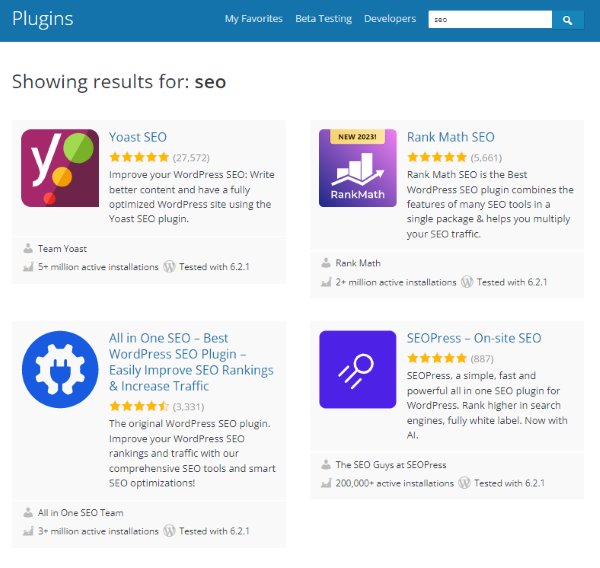
For B2B firms with websites driven by content management systems (CMS) like WordPress, you’ll find a large number of SEO content-focused plugins in their plugin libraries.
Here’s a snapshot of some popular SEO plugin options for WordPress.
Long-Tail Keyword Strengths
As mentioned above, B2B SEO often involves very niche topics and therefore more long-tail keywords that are extremely industry-specific and problem/solution specific.
Look for keyword research tools that provide more refined keyword search volume estimates and produce good lists of useful related search queries.

For many B2B firms, the more premium SEO toolkits like Semrush, Ahrefs, and Moz will be worth their higher pricing due to their massive keyword databases.
For B2B firms on tighter budgets, many of the more affordable SEO platforms like SEO PowerSuite, Mangools, Ubersuggest, and others will still do a fine job uncovering useful long-tail keyword variants in B2B niches.
They’re good options to consider for doing SEO in small and very small companies.
Low-Volume and Zero Search Volume Keywords
Related to keyword research, don’t be too alarmed if some attractive/compelling search queries in your B2B niche show up as having zero or very low monthly search volumes in the SEO keyword research tools.
This doesn’t mean you can’t get actual organic traffic from them. If the query makes a lot of sense for your B2B target audience, consider including it in your content planning, including any SEO topic clusters you may be building out.
Learn more about keyword search volume accuracy issues here.
SEO-Adjacent Features
As a B2B marketer, you may want to leverage a broader digital marketing platform that also incorporates other key areas of your marketing efforts. This could be adding pay-per-click (PPC) features as a logical complement to SEO campaigns, social media management, etc.
Many SEO toolkits are essentially SEO-only platforms. Others add these adjacent capabilities to provide additional value-add (and capture more of your digital marketing software budget.)
SpyFu is a good example of an overall SEM toolkit (SEO + PPC) with attractive pricing plans.
Some platforms, such as marketing automation or ABM platforms, may include SEO capabilities within a much broader B2B martech solution.
Free SEO Tools for B2B
Many B2B firms have annual marketing budgets that support investing in one or even several SEO tools.
However, don’t forget about the large number of completely free SEO tools and methods available.
For example, Google offers several free SEO tools. These are great for B2B, B2C, and other organizations with Google organic search as an important driver of website traffic.
Without a doubt, my favorite is Google Search Console, or GSC for short.

For B2B companies, the performance metrics in GSC will give you very helpful insights into the actual user search queries that are coming from your B2B niche audience.
GSC will also help you audit the effectiveness of your B2B content and decide which pieces and topics to add, expand, or retire. It will also help you track new incoming backlinks from other web resources in your industry.
Keep in mind that many free and simple keyword research methods are also available, including GSC and other Google-provided options.
Related: Bing Webmaster Tools is another good free option for Bing-centric SEO activities. Learn more here about Bing Webmaster Tools vs Google Search Console, as well as guidelines and tips for Bing SEO.
Other B2B SEO Considerations
SEO and Other B2B Marketing Tactics
In B2B marketing and sales, SEO should rarely be a stand-alone tactic, disconnected from other marketing channels.
On the contrary, SEO can and should be used in complementary ways with other common B2B tactics, including PPC, ABM, website visitor tracking, and social media marketing.
Here are just a few examples.
B2B SEO and PPC
Many B2B firms use both organic SEO and pay-per-click (PPC) ads as complementary components of overall search engine marketing (SEM).
In these cases, B2B marketers are aiming for enhanced presence in the SERPs for their target keywords, driving more brand impressions and higher click-through rates for both organic and paid search.
B2B firms with combined SEO + PPC strategies can definitely benefit from SEM platforms that are strong in organic SEO but also include great PPC-focused features.
SEM toolkits like Semrush and SpyFu are worth a closer look here.
B2B SEO and Account-Based Marketing (ABM)
Many B2B firms have embraced account-based marketing (ABM) as a core strategy for revenue growth based on tightly coordinated marketing and sales efforts.
In these cases, SEO traffic can help B2B revenue teams engage and expand their ABM target accounts as an ‘inbound marketing’ component of the overall ABM plan.
In short, B2B SEO helps inbound marketing support ABM strategies. It can also help bridge traditional and ABM-focused marketing efforts.
Learn more here about how ABM and SEO work well together in B2B companies.
SEO and B2B Website Visitor Tracking
B2B SEO is a great traffic driver for website visitor tracking tools that are popular with B2B sales and marketing teams.
Working together, SEO and B2B website visitor tracking tools drive new sales leads and revenue opportunities.
Further, B2B website visitor tracking platforms also support ABM strategies, can help expand target accounts based on ‘ICP fit’ (ideal customer profile), and boost sales intelligence based on B2B buyer intent insights.
All of this can start with website traffic driven by your B2B SEO efforts.
B2B SEO and Social Media Marketing
SEO in B2B firms can directly support B2B social media marketing, and vice versa.
The content used in B2B SEO campaigns can often fuel social media efforts (both free and paid). SEO content can be shared as-is (e.g., a white paper or case study), or content pieces can be quickly adapted for B2B social channels such as LinkedIn.
Content shared through social media can be picked up and amplified further, augmenting SEO traffic with new visitors from social channels.
In some cases, content promoted and shared via social channels will help generate new backlinks to your site from new supporters. This is generally very positive for your SEO and boosts referral traffic opportunities as well.
In the end, B2B SEO and social media can play very complementary roles, with each tactic supporting the other.
Brand Visibility and Thought Leadership
Last but not least, SEO for B2B organizations offers great potential to drive both brand visibility and thought leadership without the ‘pay-to-play’ price tag of other promotional channels like PPC, display ads, or paid social media.
With great niche-specific content and some sustained SEO work, even small B2B brands can work their way up the SERPs and establish beneficial visibility adjacent to much larger brands in their industry segment.
Related Posts: Learn more about using SEO as a secondary B2B marketing tactic, tips for doing SEO for ‘brochure style’ websites that are more common in smaller B2B firms, spotting your weak B2B SEO competitors, and leveraging SEO and B2B sales teamwork.
Like this post? Quickly share it with your social networks here.
B2B SEO Tools and Tactics — Closing Thoughts
SEO for B2B — Important Differences But Also Many Similarities
As illustrated above, doing B2B SEO has some important points of distinction vs B2C SEO or other forms of SEO work.
The emphases on producing high-quality content for small industry niches, lead generation and conversion, and supporting the B2B sales team are certainly at the forefront of B2B SEO.
An added benefit of B2B SEO-centric content is the ability to leverage much of it across social media, PPC, email, and other common B2B marketing channels. This is a big win, especially for any resource-strapped B2B marketing teams out there.
Many of the general-purpose SEO platforms available today will also work well in B2B situations.
However, those toolkits with extra strengths in niche keyword research, topic clustering, and content development and optimization will provide added value for B2B SEO marketers.
SEO platforms that also incorporate PPC and social media capabilities are also worth a close look for B2B teams that want to consolidate and simplify their martech stack.
Questions or Comments?
I hope this discussion of B2B SEO topics and tools has been helpful!
- Is SEO a priority for your B2B organization? Why or why not?
- What tools and tactics do you think are most essential and effective in your B2B SEO work?
- If you do both B2B and B2C work, what distinctions do you draw between them, strictly from an SEO perspective?
Feel free to add more in the comments below with any thoughts, feedback, or related questions. Thanks also for any social shares on this post!
